
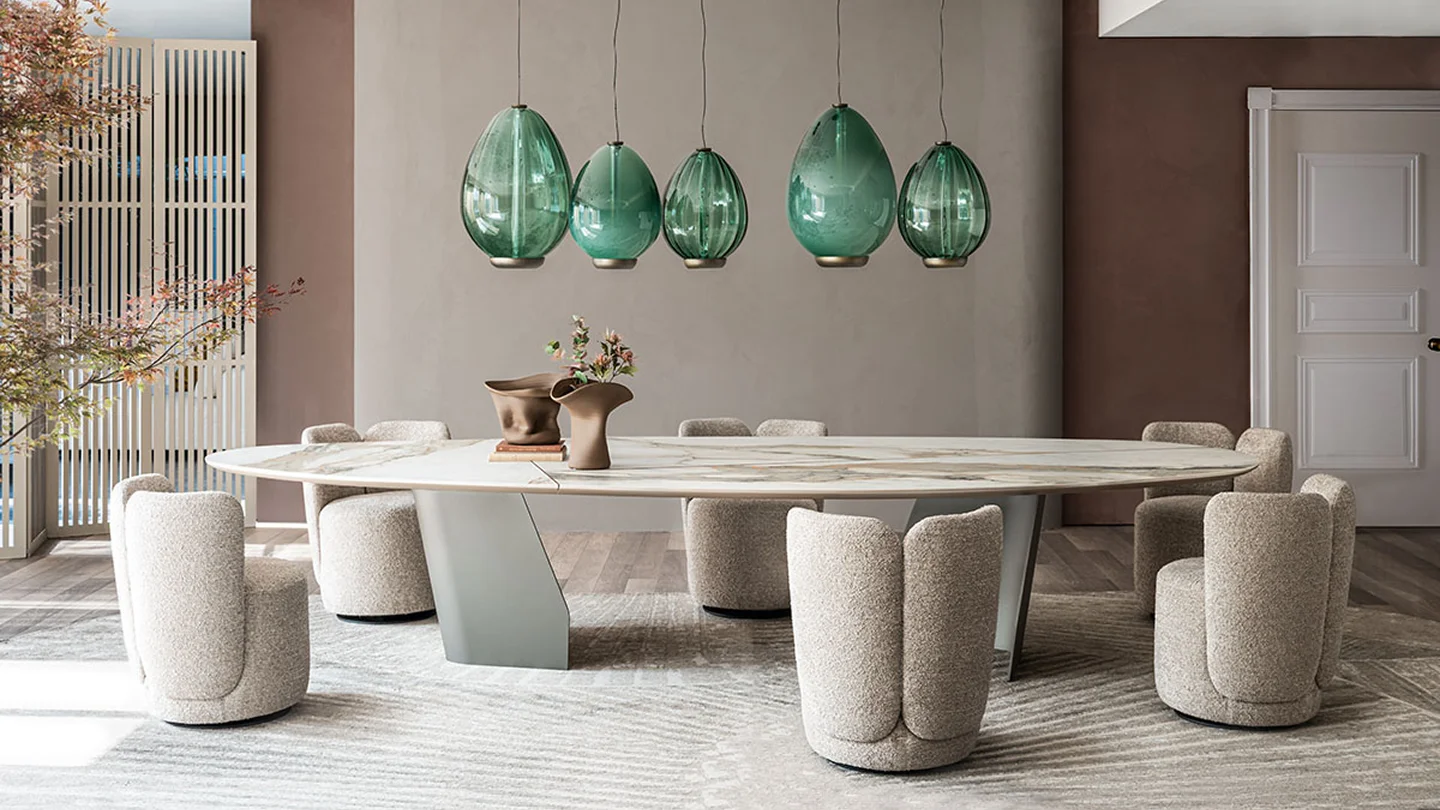
A beautifully styled home is not created by filling every surface or following a single look. It is created through decisions that feel connected: where the eye rests, how materials relate, what deserves to be displayed, and what should quietly disappear. The result feels composed without looking overworked.
The most useful home decor ideas begin with the life inside the rooms. They consider how people move, gather, read, entertain, and unwind. Once that foundation is clear, furniture, lighting, art, and objects can express personality without compromising comfort.
Begin With a Point of View
Before shopping, decide what the home should communicate. Calm and architectural? Warm and collected? Graphic and contemporary? A concise direction makes hundreds of later choices easier. It does not require every room to match, but it gives them a shared visual language.
Create a reference sheet with a few interiors, materials, artworks, and objects that capture the desired feeling. Then write down what connects them. Perhaps the rooms use low furniture, tactile neutrals, dark timber, or one decisive accent colour. Ventura Interiors’ residential portfolio is a useful place to observe how individual rooms can carry character while remaining part of a coherent home.
Establish a Focal Point in Every Room
A room feels unsettled when several elements compete for first attention. Choose one visual lead, then build the supporting composition around it. In a living room, that lead may be a sculptural sofa, an artwork, a view, or a beautifully detailed storage piece. In a bedroom, it may be the bed and its surrounding wall.
The focal point does not have to be the largest item. Contrast, colour, material, and lighting can give a smaller piece greater presence. Everything else should either frame it, balance it, or provide a quieter rhythm.
Build a Restrained, Flexible Palette
Begin with the permanent surfaces: flooring, wall colour, joinery, and major stone or timber finishes. Add the largest furniture next, followed by rugs, curtains, art, and smaller objects. Working from large areas to small details prevents the palette from becoming fragmented.
Neutral does not have to mean pale or plain. Tobacco leather, smoked glass, deep green, walnut, bronze, and warm grey can all behave as sophisticated neutrals. The key is to repeat tones with intention and reserve the sharpest contrast for a few places. This approach supports luxury home interiors because it allows craft, form, and texture to remain visible.
Layer Materials Without Creating Noise
A refined room usually combines finishes with different visual weights. Timber adds warmth, metal creates a precise edge, stone brings depth, glass introduces lightness, and upholstery softens the composition. The balance matters more than the number of materials.
Repeat at least one finish across the room so the contrasts feel related. A bronze detail may reappear in a lamp and mirror frame. A marble side table may echo a smaller stone object elsewhere. Poliform’s furniture collections demonstrate how timber, metal, glass, marble, leather, and textile can coexist within one disciplined design language.
Choose Furniture for Its Role in the Composition
Furniture is not a backdrop for decor. It determines the room’s proportions, circulation, comfort, and visual rhythm. Start with the pieces that carry the most physical and visual weight, then add smaller furniture only where it solves a real need.
Good designer furniture earns attention through line, material, construction, or function. It does not need decorative excess. The compact Baba side table, for example, is designed so its base can sit beneath a sofa, bringing the marble top closer while occupying less usable floor. Details like this make a room feel considered because form and daily use have been resolved together.
Balance Scale Before Adding More
A large room filled only with small pieces can feel scattered. A compact room crowded with heavy furniture can feel compressed. Create variation: pair a substantial sofa with slender tables, or balance a broad sideboard with a visually light mirror and lamp.
Look at the negative space around each piece. Clear floor, breathing room above a sideboard, and an uninterrupted path through the room are all part of the composition. Elegant home interiors often feel generous because their objects have enough space to register.
Make Storage Part of the Styling
Styling becomes easier when the room has somewhere to absorb practical clutter. Closed storage can hold cables, documents, tableware, toys, or everyday equipment. Open surfaces can then carry a smaller, more intentional selection of objects.
A sideboard is especially useful because it combines storage with a long styling surface. The softly elliptical Symphony sideboard offers different heights and configurations, giving it the presence of a furniture piece rather than a utility cabinet. Position a lamp, artwork, mirror, or grouped objects above it, but leave part of the top clear.
Style Surfaces With Shape, Height, and Restraint
Coffee tables, consoles, and shelves should not look like storage trays for attractive things. Group objects so they read as one composition. Vary height and shape, and give the eye a clear place to land. A low bowl, a taller vessel, and a small stack of books may be enough.
Odd-number groupings can be useful, but they are not a rule. What matters is the relationship between the objects and the empty surface around them. Keep items that are used daily accessible, and remove pieces that contribute neither meaning nor visual structure. Practical home styling ideas should make the room easier to live in, not harder to maintain.
Use Mirrors to Redirect Light and Attention
A mirror can extend a sightline, return daylight into a darker zone, or animate a quiet wall. Its placement should respond to what it reflects. A mirror opposite visual clutter simply duplicates the clutter, while one aligned with a window, artwork, or considered furniture arrangement can deepen the room.
The Shimmer Mirror changes with light and viewing angle through its shaded silvering and iridescent finish, allowing the mirror itself to become an expressive element. For a quieter effect, the Audrey mirror uses soft edges and a thin frame, with wall and floor versions that suit different compositions.
Layer Lighting at More Than One Height
Lighting should support both the architecture and the activities taking place within it. Combine ambient illumination with task light near reading, working, or serving areas, then add accent light where texture, art, or an object deserves emphasis.
Varying the height of light sources makes a room feel more dimensional after sunset. The Helga lamp is available in floor and table versions, with a geometric steel and plexiglass structure and a linen-covered light element. A family of forms like this can create continuity without repeating the exact same fixture.
Let Art and Objects Carry the Personal Story
The most convincing luxury home décor includes signs of the people who live there. Art, books, travel finds, ceramics, photographs, and inherited objects introduce memory and specificity. They keep a refined interior from becoming anonymous.
Avoid spreading meaningful pieces evenly across every wall and shelf. Give stronger objects room, and rotate secondary pieces rather than displaying everything at once. Frames do not all need to match, but their finishes and spacing should have a relationship to the furniture and architecture around them.
Use Textiles to Adjust Mood and Acoustics
Rugs, curtains, upholstery, cushions, and throws change how a room feels as much as how it looks. They soften hard surfaces, improve acoustic comfort, and introduce colour or pattern at a scale that can be adjusted more easily than permanent finishes.
Choose a rug large enough to connect the principal furniture rather than float between it. Let curtains relate to the full height of the room, and vary fabric textures without collecting too many unrelated patterns. In luxury interior design, textiles are most effective when they add depth while supporting the main furniture instead of distracting from it.
Give Transitional Areas a Purpose
Entrances, corridors, and the space between living and dining areas are often treated as leftovers. A well-proportioned console, bench, mirror, or artwork can turn them into intentional pauses. These pieces should still protect the movement path and respond to nearby doors.
For an entrance, combine one practical function with one expressive gesture. A surface for keys may sit below a sculptural mirror. A bench may provide a place to pause while anchoring an artwork. The Pleasure mirror, with its irregular, pebble-like forms and range of sizes, can complement consoles and storage pieces without relying on a conventional rectangle.
Run the Six-Step Editing Test
- Stand at the entrance of each room and identify what draws attention first.
- Remove any object that blocks movement, duplicates a function, or weakens the focal point.
- Check whether the largest furniture pieces share a clear relationship in scale and placement.
- Limit each styled surface to objects that create meaning, function, or visual rhythm.
- Review colours and materials in both daylight and evening light.
- Photograph the room, then correct any crowding or imbalance that becomes obvious in the frame.
Editing is not about making a home sparse. It is about improving the hierarchy. Once distractions are removed, the pieces with real character become easier to appreciate.
Bring the Rooms Together Without Making Them Identical
The strongest styling schemes create continuity without forcing uniformity. Repeat selected materials, tones, or shapes, then allow each room to respond to its own use and light. A bedroom may interpret the home’s palette more softly, while a dining area can carry a stronger contrast.
Ventura’s service for private individuals coordinates furniture selection, built-in solutions, planning, ordering, fittings, storage, and delivery. Reviewing the home as one connected scheme helps ensure that individual pieces support the whole rather than competing room by room.
Create a Home That Looks Considered and Feels Lived In
Good styling does not announce every decision. It creates an ease that can be felt in clear movement, comfortable seating, balanced light, and objects placed with purpose. That is the difference between a room that merely contains beautiful things and one that expresses a clear, personal point of view.
Explore Ventura Interiors’ furniture, lighting, mirrors, and accessories, then discuss how their scale, finishes, and placement can work across your home. Schedule a design consultation at the Bengaluru or Hyderabad showroom for a coordinated styling and furniture plan.
0 Comments