
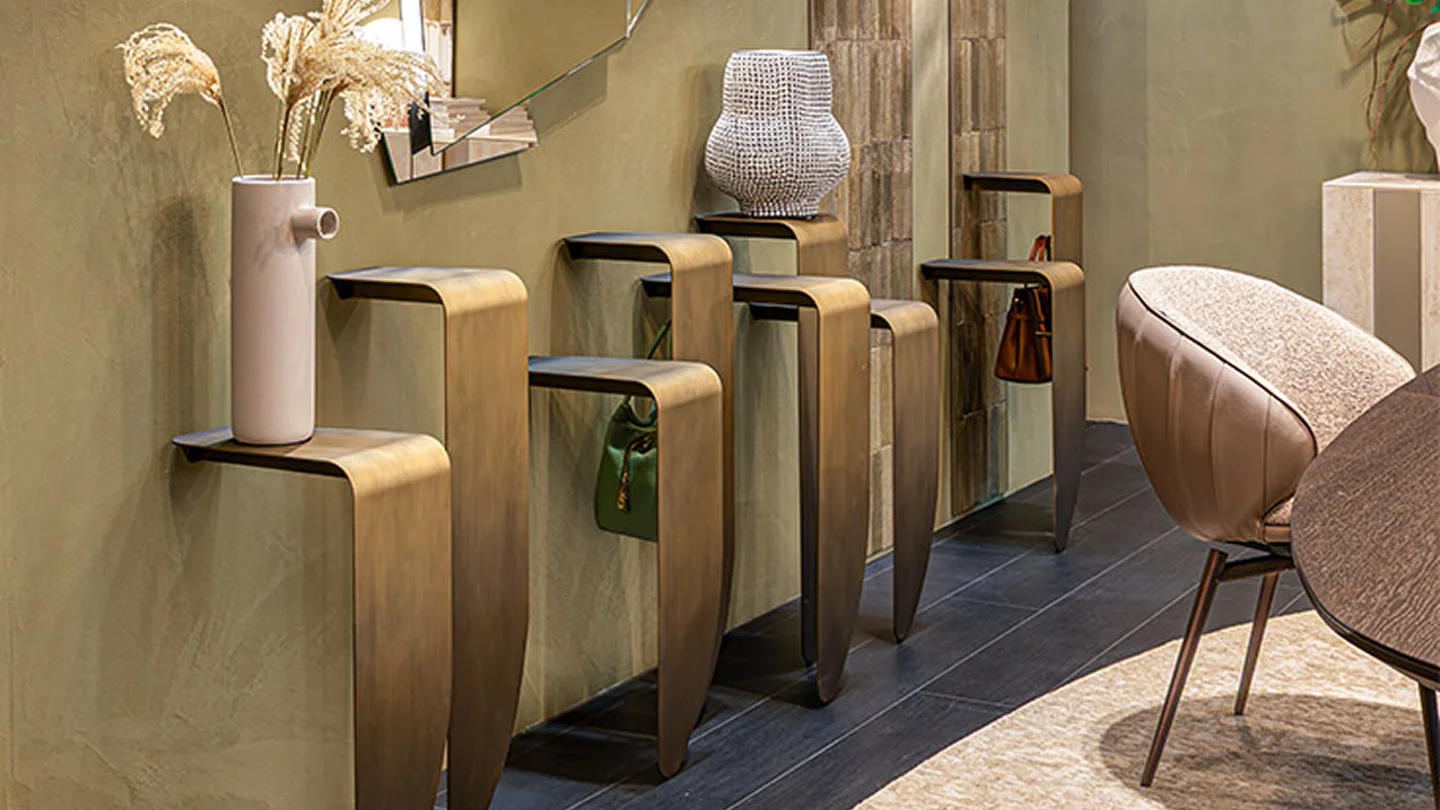
The most useful interior trend is not the one you can recognise instantly. It is the one that changes how a home is planned.
If curved furniture is trending, the useful question is whether a curve improves movement in the room. If darker colours are returning, ask where deeper tones would create a better atmosphere. If natural materials are becoming more important, decide which surface deserves to carry that material instead of adding timber and stone everywhere.
The latest interior design trends are moving luxury homes away from anonymous perfection and towards spaces with more personality, texture and adaptability.
For Indian homes, that does not mean copying an international reference image. It means translating the useful ideas through climate, architecture, family routines and the way the home is actually occupied.
The biggest shift is towards more personal interiors
For several years, many premium interiors converged around a similar formula: pale neutrals, rounded furniture, light stone and minimal objects.
That language is not disappearing, but it is becoming less dominant.
Homes are beginning to show more evidence of the people who live in them.
Art, books, craft, stronger colour, collected objects and furniture from different design languages are being used with more confidence.
This does not automatically mean maximalism.
A restrained room can still feel personal if its choices are specific.
An inherited object can sit beside contemporary furniture. Indian stone can coexist with an Italian sofa. Local art can become the strongest visual moment in a room built around quiet international pieces.
The important change is that individuality is no longer treated as visual noise that needs to be removed.
Luxury Indian homes are becoming more interesting because they are becoming harder to copy.
Curves are staying, but they are becoming more selective
Curved furniture remains relevant, but the strongest rooms are using it with greater purpose.
A rounded sofa can improve conversation.
An oval dining table can soften circulation.
A curved chair can interrupt a room dominated by straight architecture.
The mistake is repeating the same geometry everywhere.
Once the sofa, rug, coffee table, mirror and lighting all repeat the same curve, the room starts to feel themed.
Better rooms use contrast.
A soft sofa can sit beside a precise stone table. A round dining table can be paired with more architectural chairs. Curved furniture can work against straight cabinetry.
The Poliform Bellport sofa system is a useful reference for understanding how softness and flexibility can be integrated without making the room lose structure.
The trend is not really “curves”.
It is a move towards furniture that makes rigid rooms feel easier.
Material richness is replacing flat neutrality
Luxury interiors are becoming more tactile.
Timber grain, stone variation, textured upholstery, metal detailing and plaster-like wall finishes are being used to create depth.
The important difference is that these materials are being allowed to look like themselves.
Stone can show variation. Timber does not need to be perfectly uniform. Upholstery can have visible texture.
This creates rooms that feel less manufactured.
For Indian homes, the opportunity is significant because many projects already use rich stone, timber and craft traditions.
The challenge is editing.
If the floor has dramatic marble, the walls and furniture may need to become quieter. If a room uses strong timber joinery, another large timber furniture piece can become repetitive.
Assign materials roles.
One creates weight. Another warmth. Another softness.
A home becomes richer when materials are allowed to contrast instead of compete.
Sofas are becoming more tailored again
Comfort is still essential, but very soft, oversized sofas are no longer the only expression of contemporary luxury.
There is growing interest in seating with clearer outer lines.
The seat can remain deep. Cushions can remain soft. But arms, bases and backs are becoming more controlled.
This is especially useful in premium apartments.
A large sofa can dominate an open-plan living and dining space even when the floor plan technically accommodates it.
A tailored silhouette allows the sofa to feel generous without becoming the room’s visual wall.
For larger homes, this creates more flexibility too.
A controlled main sofa leaves room for lounge chairs, tables and art to create their own moments.
The shift is not towards uncomfortable furniture.
It is towards comfort with structure.
Open-plan homes are being zoned more intelligently
Open-plan living is not disappearing, but the idea of one completely undivided room is changing.
Furniture is doing more architectural work.
The back of a sofa can define the living zone.
A sideboard can mark the transition to dining.
A rug can create a clear visual boundary without changing the floor.
Lighting can distinguish one activity from another.
This is particularly useful in luxury Indian apartments where a single large room may need to support television, entertaining, family time and dining.
The goal is connection without confusion.
A room should feel open, but the eye should still understand where one activity ends and another begins.
This is why furniture scale and orientation matter more than ever.
The home is being organised through movable objects rather than permanent walls.
Colour is becoming more confident
Neutral interiors remain relevant because they are easy to live with and allow materials to read clearly.
But neutral no longer means the absence of colour.
Warm browns, olive tones, deeper blues, muted reds and ochres are appearing more confidently across upholstery, walls and smaller furniture.
The strongest use of colour is usually concentrated.
A deeper sofa can anchor a pale room.
A study can use a darker wall treatment.
A bedroom can become more enveloping through one consistent tone across several surfaces.
The weaker approach is distributing the same accent colour through cushions, objects and accessories simply to make the room “match”.
Luxury colour feels intentional when it affects atmosphere.
It should change the experience of the room, not just create a palette.
Bedrooms are becoming more cocooning
The bedroom is moving away from being a pale, minimal box.
Wider upholstered headboards, stronger textiles, fuller curtains and softer lighting are creating more enclosure.
The shift is not decorative for its own sake.
A bedroom benefits from acoustic softness, lower evening light and fewer visually active elements.
Technology is also becoming quieter.
Televisions may be integrated more discreetly. Chargers can disappear into bedside furniture. Controls can remain accessible without becoming prominent.
The result is a room that feels more restorative.
This is a useful trend because it can be adopted without rebuilding the bedroom.
Textiles, lighting and furniture can change the atmosphere significantly before any major construction is considered.
Craft is becoming quieter
Craftsmanship is increasingly being communicated through detail rather than decoration.
A precisely stitched curve, a well-resolved timber edge, a stone junction or a controlled metal detail can carry more quality than an obviously ornate feature.
This is especially relevant to luxury furniture.
The work is often visible only when the object is inspected closely.
Ventura’s residential portfolio is useful to explore because completed rooms show how furniture and materials behave together at full scale rather than as isolated samples.
For homeowners, this encourages a different buying habit.
Look closer.
Open drawers. Examine seams. Check transitions. Look at furniture from the side and rear.
Quality should remain visible when the room is no longer staged for a photograph.
Flexibility is becoming part of luxury
A home that can adapt is increasingly valuable.
Modular sofas can change seating arrangements.
Smaller tables can move when guests arrive.
Storage can combine work, media and display.
Dining areas can support both everyday meals and larger gatherings.
This flexibility is particularly useful in cities where even premium homes need rooms to perform more than one function.
The important part is that adaptable furniture should still feel resolved.
A modular system should not look temporary simply because it can change.
The strongest design makes flexibility almost invisible.
The room feels complete in several different configurations.
Sustainability is shifting from a look to a decision
Sustainable design is becoming less about visual cues and more about ownership.
Buying fewer pieces, choosing materials carefully, maintaining furniture and keeping products in use for longer can matter more than adding one obviously “eco” feature to a room.
This aligns naturally with luxury furniture.
A piece that remains useful and desirable for many years is more meaningful than something replaced because a short-lived trend changed.
This is why long-term proportion and construction matter.
A distinctive piece can still be a good investment if the design idea is strong enough to survive beyond the current moment.
The latest interior design trends are most useful when they help homeowners choose with more intention.
How should Indian homes use global design trends?
Use global trends as vocabulary, not instruction.
A curved sofa may work beautifully in one room and feel forced in another.
A dark cocooning bedroom may suit a shaded apartment but feel too heavy in a room with limited daylight.
A sculptural stone table may be the perfect focal point in a simple dining room and unnecessary in one that already has strong marble flooring.
The home must remain the filter.
Climate, light, maintenance, family routines and local materials should shape the final choice.
Ventura’s private-client furniture planning process is useful in this context because the role of design assistance is not to reproduce a trend. It is to understand which ideas actually belong in the room.
The next version of luxury is more specific
The strongest design trends are all pointing in a similar direction.
Homes are becoming more personal.
Furniture is becoming more adaptable.
Materials are being allowed to show more character.
Comfort is being given more structure.
Colour is becoming more confident.
Craft is becoming quieter but more important.
The result is not one new “look”.
It is a better framework for making decisions.
A luxury Indian home should not look current because every trend is visible.
It should feel current because the choices are intelligent, personal and capable of lasting.
0 Comments