
Some of the most difficult furniture to make looks almost effortless once it is finished.
A cabinet door closes into a perfectly aligned surface. A sofa module connects without disturbing the proportions. A metal support appears almost too slender for the weight above it. Upholstery follows a curve without bunching or breaking the line.
That apparent simplicity is one of the most useful ways to understand Italian contemporary furniture.
The design is often modern, but the real difference is not novelty. It is the combination of an idea, a material and the technical ability to resolve the idea cleanly enough for daily use.
Contemporary does not mean one style
Italian contemporary furniture can be architectural, soft, playful, minimal or sculptural.
Some pieces rely on quiet proportion. Others use colour, unexpected scale or an unusual silhouette. One brand may focus on modular systems. Another may be known for expressive upholstery. Another may turn storage or a side table into a strong object within the room.
This is why modern Italian furniture and Italian furniture design should not be reduced to white rooms, straight lines and minimal decoration.
The common thread is usually discipline.
Edges are controlled. Materials are selected deliberately. Proportions feel resolved. Technical complexity is hidden rather than displayed for its own sake.
When buyers compare contemporary furniture, it is more useful to look at how the object is made and how it behaves in the room than to ask whether it fits one aesthetic label.
Craftsmanship has moved, not disappeared
Modern production methods have changed where craftsmanship appears.
Digital cutting, moulding and precision machining allow complex geometry to be produced consistently. That does not remove human judgement.
Material selection still matters. Upholstery still has to be tensioned correctly. Stone edges need careful finishing. Timber variation has to be composed. Seams, joins and surfaces are still where quality becomes visible.
A curved upholstered back is a good example.
The final shape may look simple, but foam density, fabric stretch, seam position and frame geometry all have to work together. If any one of those decisions is wrong, the curve will not feel clean.
The same principle applies to cabinetry.
A visually quiet storage piece may require extremely precise alignment to make doors, gaps and surfaces read as one composition.
This is why contemporary furniture can look less obviously “crafted” while still depending heavily on craft.
The work has moved into precision.
Innovation is useful only when it improves the object
Not every new idea deserves to become furniture.
Innovation is valuable when it improves comfort, flexibility, maintenance, storage or the relationship between the piece and the room.
A modular sofa is useful if its elements can genuinely change the seating arrangement.
A suspended cabinet is useful if it makes the room feel lighter and improves floor access.
A material experiment is useful if it creates strength, lightness, durability or a visual effect that would be difficult to achieve otherwise.
The warning sign is novelty without consequence.
If the unusual feature disappeared and nothing about the use changed, the design may be relying mainly on surprise.
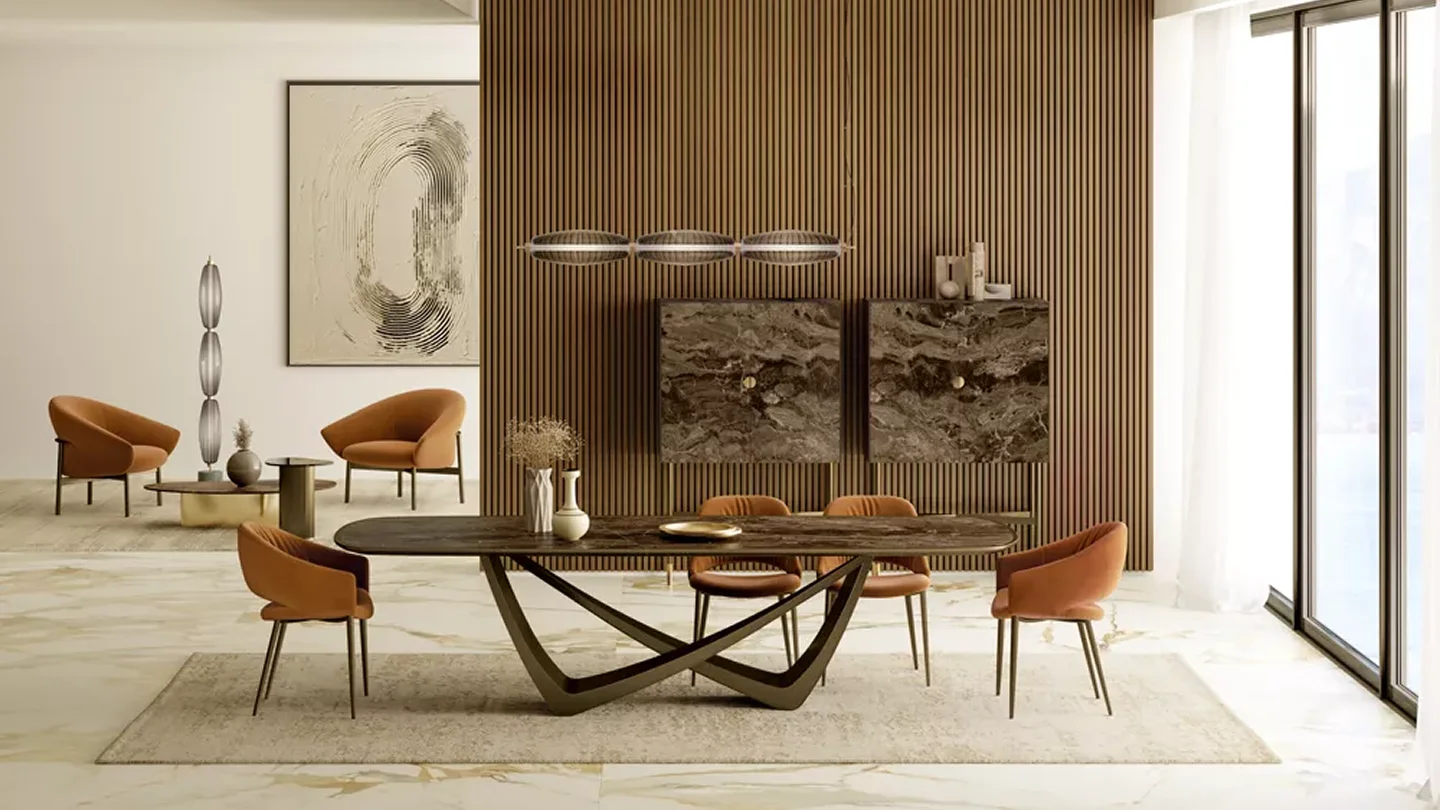
The Mogg Beam table is a useful example of how a familiar furniture category can be given a stronger conceptual identity without losing its basic function.
This is where expressive Italian furniture becomes interesting: the idea is visible, but the object still works.
Modularity has become a core contemporary idea
Modern homes rarely stay fixed.
A living room may need to support work during the day, family time in the evening and larger gatherings on weekends.
That makes modularity increasingly valuable.
Sofas can shift from linear arrangements to more open conversation layouts. Storage can combine open display and closed cabinets. Wall systems can change as televisions, books, art and technology evolve.
The challenge is making modular furniture feel intentional.
Poor modular design can look like a collection of repeated boxes.
Good contemporary furniture design uses proportion, repetition and detailing to make separate units feel like one system.
Lago Design is especially relevant here because its furniture language often uses modularity across storage, wall systems and living-room furniture rather than treating flexibility as a feature of sofas alone.
The 36E8 TV Unit shows how storage, material and visual lightness can be combined in a contemporary living-room composition.
Materials create the personality
Italian modern furniture often becomes most interesting where materials meet.
Stone introduces weight and natural variation. Timber creates warmth. Glass can make a large object feel lighter. Metal allows slender structures and precise edges. Upholstery adds comfort and acoustic softness.
The value is not in using all of them.
It is in deciding which material should lead.
A living room with strong marble flooring may need furniture that brings warmth through timber and upholstery. A quiet room may benefit from a sculptural stone table or a glass storage piece that introduces contrast.
Look closely at transitions.
How does the metal meet the stone? How does upholstery wrap the frame? How is glass supported? Does the timber edge feel finished from every angle?
These junctions often reveal more about quality than the main surface.
Contemporary design is rarely about the material alone. It is about how confidently the material has been handled.
Italian contemporary furniture does not need to be minimal
Minimalism is only one design language.
Some Italian brands deliberately move in the opposite direction, using expressive shapes, unusual proportions and a stronger visual idea.
This can be valuable in a home that already has a calm architectural base.
One sculptural piece can add personality without forcing the entire room to become decorative.
The mistake is allowing every object to compete.
A statement chair, unusual table and expressive shelving system can each be compelling, but they may weaken one another if placed together without hierarchy.
A strong contemporary room often combines restraint and expression.
The sofa may be quiet. The side table can be more experimental. Storage can provide visual order. Art can bring another layer of individuality.
Modern does not mean removing personality.
It means controlling it.
How contemporary furniture works in Indian homes
The best contemporary furniture should respond to the local home rather than asking the home to imitate a European showroom.
Room size matters.
Premium apartments may benefit from raised bases, modular systems and visually lighter storage. Large villas can support deeper furniture and sculptural pieces that are meant to be seen from several angles.
Climate matters too.
Sunlight changes upholstery. Dust changes maintenance. Air-conditioning affects how materials feel in use. Strong natural light can make high-gloss surfaces more reflective than expected.
Lifestyle matters most.
A family that entertains often may value adaptable seating. A home with children may need different fabrics from a formal apartment. A collector may need open display where another household prefers closed storage.
Italian contemporary furniture works well when its design intelligence is adapted to these realities.
It should support the home, not erase it.
What to inspect in the showroom
Contemporary furniture deserves close inspection because much of the design quality is deliberately quiet.
Look behind the sofa if the back will be visible.
Open every drawer and door. Check whether gaps are consistent. Run a hand along edges. Look underneath tables. Examine how legs or bases meet the top.
If the piece is modular, ask how the units connect and how easily they can be rearranged.
If the furniture uses natural stone or timber, ask how much variation to expect in the delivered piece.
If it uses upholstery, compare fabric samples under different lighting and ask about maintenance.
The showroom should answer practical questions, not only aesthetic ones.
A piece is worth the premium when the quality remains convincing after the hero photograph disappears.
What are the different styles of Italian furniture?
A useful way to think about Italian furniture is by design language rather than fixed categories.
Architectural furniture relies on clear lines, integrated storage and a sense of order.
Soft contemporary furniture uses upholstery, generous comfort and relaxed forms.
Sculptural furniture makes form more visible through unusual bases, curves or proportions.
Experimental furniture may use colour, humour or unexpected construction.
A home can use all four in different proportions.
The sofa can provide calm. A table can introduce sculpture. Storage can remain architectural. A smaller accent piece can carry the experimental idea.
The room becomes richer because the pieces are not trying to do the same job.
That is more useful than trying to make every object fit one description of “Italian style”.
The best contemporary design hides the difficulty
The most successful Italian contemporary furniture often makes complicated work feel natural.
A module moves without disturbing the composition. A door aligns precisely. A curve supports the body. A material transition looks inevitable.
That is where innovation and craftsmanship meet.
One creates new possibilities.
The other makes those possibilities feel resolved.
For a premium home, that combination matters more than novelty. Contemporary furniture should feel current when it arrives and still feel intelligent years later.
Ventura’s European furniture brands make it possible to compare these different design languages in one place, which is more useful than treating contemporary Italian design as one fixed look.
0 Comments