
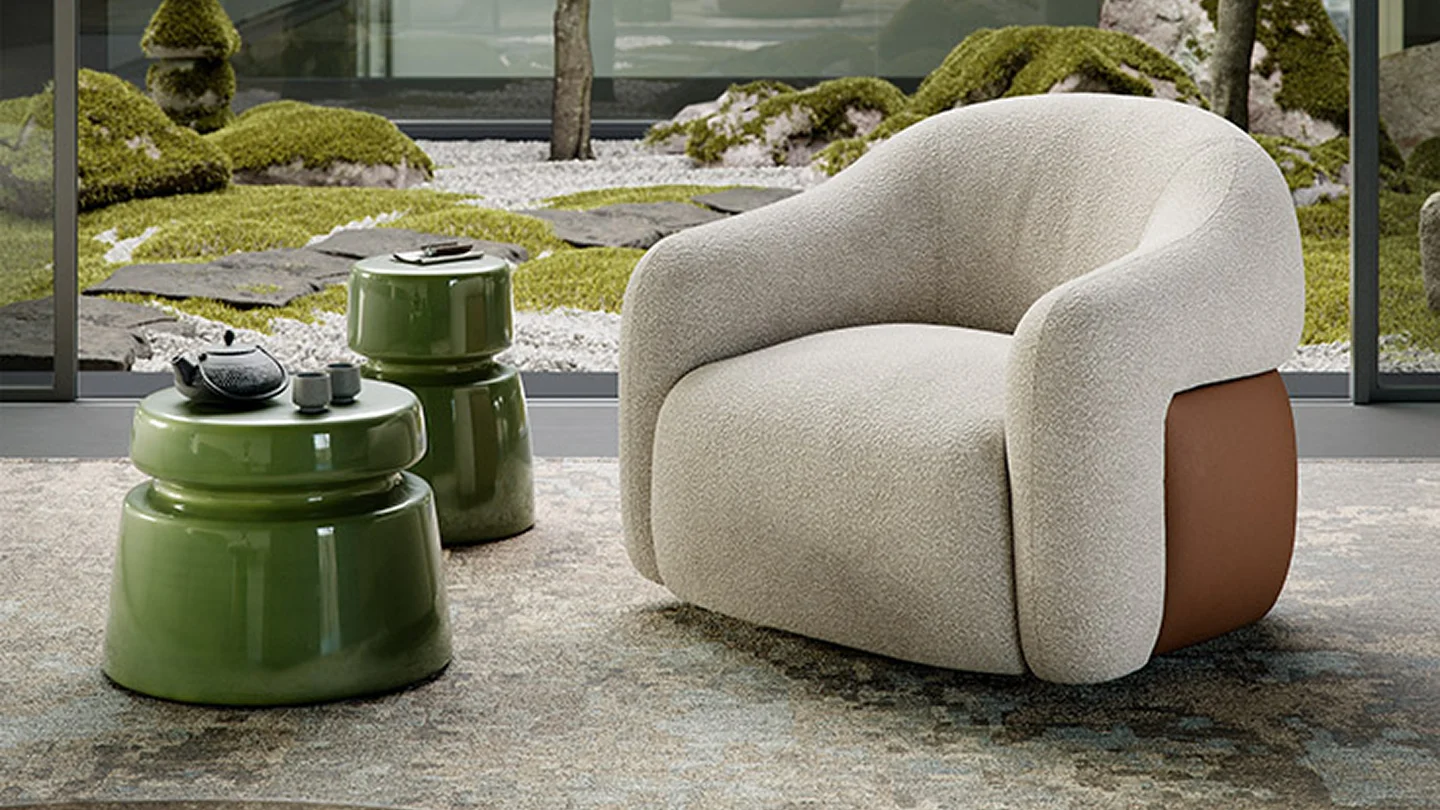
Furniture is becoming less about filling a room and more about shaping how that room feels and functions. Softer forms, warmer materials and more flexible layouts are changing the way homeowners approach modern interiors, with individual pieces expected to offer both character and everyday usefulness.
Current furniture trends reflect this shift. Rather than following one dominant aesthetic, interiors are combining sculptural silhouettes, tactile finishes, natural materials and adaptable furniture. Recent showcases at Milan Design Week have similarly highlighted craftsmanship, stone, wood, modularity and organic forms as important directions in contemporary design.
At Ventura Interiors, we see these ideas reflected across contemporary European and italian furniture collections, where design is increasingly about balancing visual impact with the way people actually live.
Softer Shapes Are Changing the Room
Straight lines are no longer the only language of contemporary furniture.
Curved sofas, rounded armchairs and tables with softened edges are increasingly being used to make interiors feel more fluid. ELLE Decor has identified sculptural and organic silhouettes as one of the notable furniture directions of 2026, particularly across seating and timber furniture.
These shapes can also influence how people interact with a room. A curved sofa can encourage conversation rather than directing every seat toward one focal point, while a rounded dining table can make circulation easier in compact spaces.
Brands such as Saba Italia and Miniforms demonstrate how softer forms can be expressive without becoming overly decorative. Ventura currently represents both brands in India.
Minimalism Is Becoming Warmer
For several years, minimalist design was associated with stark spaces, sharp lines and very restrained colour schemes. That interpretation is changing.
Today, simplicity is more likely to be balanced with timber, textured upholstery, natural stone and softer forms. The room can remain visually quiet without feeling empty or clinical.
Poliform is a good example of this approach. Its collections use clean lines and carefully resolved proportions, but combine them with tactile materials and warmer finishes. Ventura is an official Poliform location in India.
This evolution of minimalist design works particularly well in Indian homes where furniture needs to feel refined while still supporting comfortable, everyday living.
Neutral Does Not Have to Mean Plain
Neutral colour palettes are still relevant, but they are becoming warmer and more layered.
Instead of relying only on white, grey and beige, contemporary spaces are introducing sand, taupe, ivory, walnut and earthy brown. ELLE Decor India has recently highlighted sun-warmed ivory, almond and other toasted neutral tones, while newer Indian residential projects are using greige and off-white alongside wood, stone and tactile fabrics.
The key is variation.
Using several related tones allows neutral colour palettes to create depth rather than making every surface look the same. A pale sofa might sit against darker timber, for example, while stone, textured fabric or metal provides another layer of contrast.
Materials Are Becoming More Tactile
What furniture feels like is becoming almost as important as how it looks.
Wood, stone, woven fibres, textured fabrics and handcrafted surfaces are becoming more visible within contemporary interiors. Milan Design Week 2026 placed strong emphasis on wood, stone, weaving and handcrafted processes, while ELLE Decor India has highlighted renewed experimentation with cane, sabai grass and other natural fibres.
Within italian furniture, this material-led approach is often expressed through unexpected combinations. Cattelan Italia, for instance, works across marble, ceramic, glass, timber and metal to create furniture where the material becomes part of the identity of the piece.
For homeowners, the practical lesson is simple: consider texture alongside colour. Smooth stone, warm wood and upholstered surfaces can give a room more depth without requiring additional decoration.
Statement Furniture Is Becoming More Personal
The latest styles are also moving away from interiors where every piece follows exactly the same design language.
Instead, one distinctive chair, table or cabinet can introduce personality while the surrounding furniture remains quieter. These statement pieces may stand out because of their form, colour or material rather than excessive ornament.
Miniforms is particularly relevant here, with collections characterised by playful shapes, bold colour and distinctive furniture forms.
The important part is restraint. Statement pieces work best when they have enough visual space around them. A sculptural dining table, for example, may need simpler chairs rather than equally expressive furniture competing for attention.
Flexible Furniture Is Becoming More Important
One of the strongest current furniture trends is the move toward adaptability.
Homes increasingly need to support different activities throughout the day, particularly in apartments and open-plan layouts. Modular sofas can change according to the size of a gathering, while flexible shelving and storage systems can adapt when the function of a room changes.
LAGO approaches furniture through modular systems across living, sleeping and storage spaces, while Saba Italia is particularly known for adaptable seating configurations.
This flexibility is especially relevant when selecting designer furniture for Indian homes, where the same space may need to accommodate entertaining, relaxation and everyday family use.
What Furniture Styles Are Trending in India?
The latest furniture styles in India are not simply copies of international trends. They are being adapted to local architecture, climate and lifestyles.
Recent Indian interiors show a combination of warmer neutrals, curves, natural materials and layered textures, while the wider market is increasingly presenting furniture as part of complete room compositions rather than isolated products.
This makes versatility increasingly important. Homeowners are looking beyond matching sets and choosing furniture collections that allow pieces to work together without appearing identical.
At the same time, international design is becoming easier to experience locally. Ventura’s Bengaluru and Hyderabad showrooms bring together brands such as Poliform, Cattelan Italia, Bontempi Casa, Miniforms and LAGO, making it possible to compare different design approaches in person.
Choose Trends That Work Beyond the Moment
The most useful furniture trends are the ones that respond to how homes are actually changing.
Curves can make a layout feel softer. Modular pieces can make it more adaptable. Natural materials can introduce warmth, while an expressive table or chair can prevent a restrained room from feeling anonymous.
At Ventura Interiors, we recommend looking at trends as inspiration rather than rules. Consider how a piece relates to your room, how it feels to use and how comfortably it can sit alongside furniture you may keep for years.
When these decisions are made together, contemporary furniture can feel current without becoming temporary.
0 Comments