
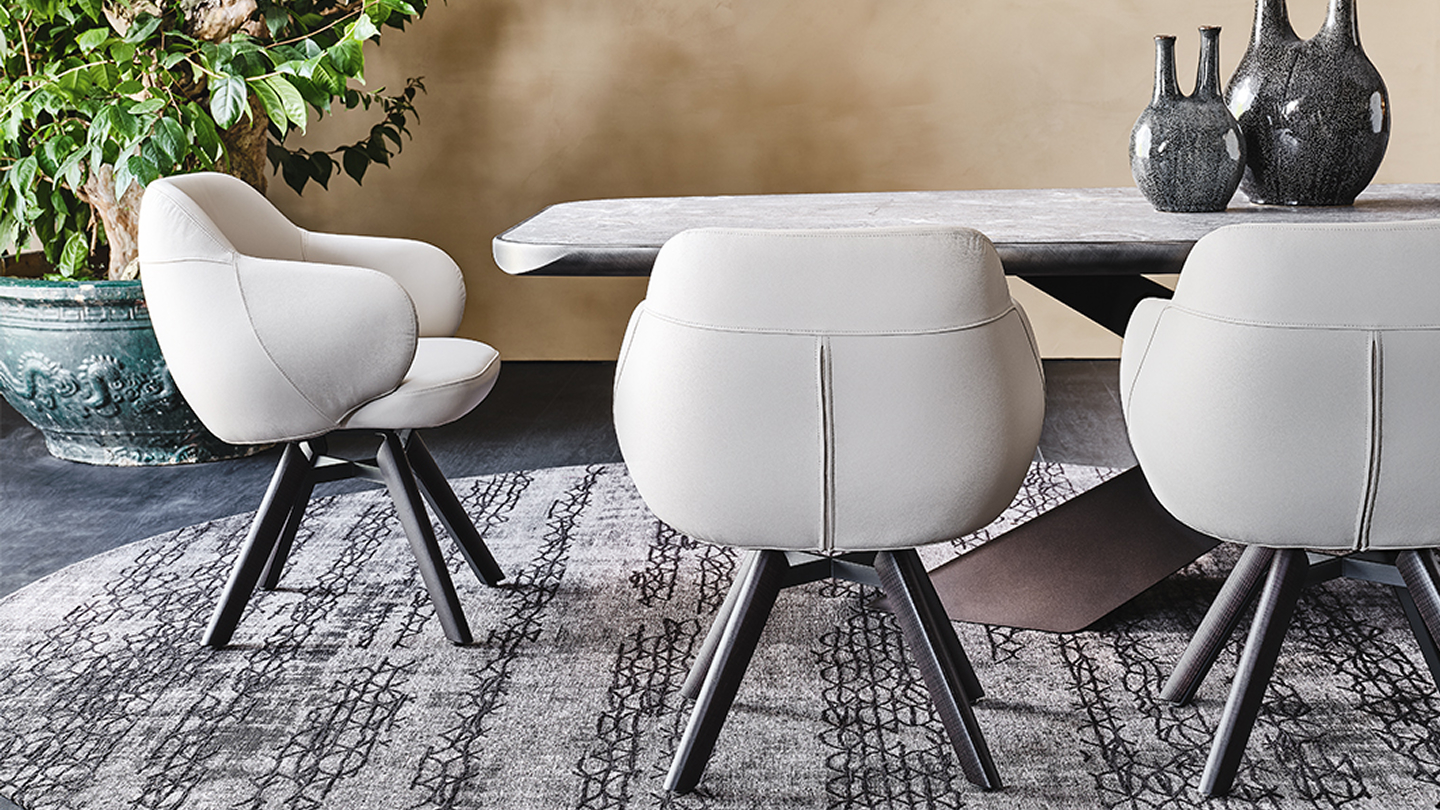
A dining table often becomes the centre of everyday life. It hosts quick breakfasts, family dinners, festive meals and long conversations with friends. The chairs around it should therefore do more than complete the photograph. They need to feel comfortable, suit the table and leave enough room for everyone to move easily.
Understanding how to choose dining chairs begins with looking at the complete setting. The shape of the tabletop, position of the base, available floor space and way your family uses the room all influence the right choice. At Ventura Interiors, we bring these details together so the table and chairs feel connected without looking like a predictable matching set.
Begin with Comfort and Proportion
The most comfortable chair is one that supports your back, gives you enough seat depth and allows your feet to rest naturally on the floor. A soft upholstered seat can make long dinners more enjoyable, while a gently curved back provides support without making the chair feel bulky.
The relationship between the seat and tabletop also matters. Most dining tables are approximately 74 to 76 cm high, while chair seats are commonly around 44 to 48 cm high. This usually leaves about 25 to 30 cm between the seat and the top, giving your legs comfortable room.
When checking dining chair size, measure the chair’s complete width and depth rather than looking only at the seat. Allow space between each chair and enough room behind it for someone to pull it out. If you prefer armrests, confirm that they can slide beneath the table without touching the frame underneath the top.
A dining chair may look beautifully proportioned on its own but still feel too wide once six or eight are placed together. Seeing the full arrangement before ordering helps avoid a crowded setting.
Match Curved Chairs with Round and Oval Tables
A round dining table already has a soft and welcoming shape. Chairs with curved backs can continue that visual flow, while slim straight-backed designs create a gentle contrast. Since round tables often use a central base, they can also provide more freedom when arranging seats around them.
Avoid chairs that are excessively wide, especially when the table is compact. Broad arms or heavy frames can make the arrangement appear crowded and reduce the number of people who can sit comfortably.
With oval dining tables, you can follow the long curve using chairs with rounded backs or soften the setting with lightly upholstered silhouettes. An oval table combines the length of a rectangular design with smoother ends, so the chairs should feel equally easy and balanced. A taller chair can create a more formal look, while a lower back keeps the room visually open.
Keep Square Tables Visually Balanced
Square dining tables have a strong sense of order. Placing one chair on each side maintains that symmetry and works particularly well in compact dining rooms. Clean-lined chairs usually complement the table’s geometry, but a rounded back can soften sharp corners and make the setting feel less rigid.
Pay attention to the position of the table legs. A chair should fit comfortably between them without forcing someone to sit at an awkward angle. If the table has a central base, you may have more flexibility with slightly broader seats.
For a larger square table, make sure the room has enough width on every side. The setting should not interrupt the route between the dining area, kitchen and living room.
Let the Table Material Guide the Chair
Table materials affect how heavy or light the complete arrangement appears. Glass dining tables naturally create an airy look because the floor remains visible through the top. Upholstered chairs can add warmth and colour, while timber or leather finishes prevent the setting from feeling too cold. Since the table base is visible, it should also relate to the chair legs.
A marble dining table already has a strong material presence. Chairs with clean frames and soft upholstery allow the stone to remain the focus. You can repeat one of the marble’s softer tones in the fabric or introduce timber to balance the cool surface.
With wooden dining tables, the chairs do not need to use the exact same timber or finish. A slightly lighter or darker wood can add depth, provided the undertones feel related. Upholstered seats, leather details or slender metal legs can also keep the room from appearing overly matched.
A stone dining table benefits from the same sense of balance. If the top and base are both visually substantial, choose seating with a lighter outline. When the stone top rests on a slim or sculptural frame, the chairs can carry a little more volume and texture.
Choose Between Lighter and Darker Chairs
Dining chairs do not automatically need to be lighter or darker than the table. Either approach can work when the contrast feels intentional.
Lighter seating can soften a dark table and make the room feel more open. Darker chairs can give a pale table greater definition and create a grounded, formal mood. A tonal arrangement, where the table and chairs sit within the same colour family, produces a calmer result.
The easiest way to connect contrasting pieces is to repeat one detail. The chair legs might echo the table base, the upholstery might pick up a shade from the stone, or a nearby sideboard might bring the two finishes together. This creates continuity without requiring every piece to match.
Explore Dining Chair Styles for 2026
Current dining chair styles are becoming softer, more comfortable and more expressive. Curved backs, rounded corners, tactile fabrics and warmer wood finishes are bringing character back into dining rooms. Sculptural forms are also becoming popular, particularly when they remain practical enough for everyday meals.
Mixed materials continue to feel relevant. Timber paired with upholstery, metal combined with leather, and softly padded seats on slender frames can introduce detail without overwhelming the room. Instead of following a trend exactly, choose the element that suits your home and can remain appealing after the season changes.
For Indian homes, comfort and maintenance remain equally important. If the table is used every day, select upholstery that is easy to care for. In an open-plan home, lower chair backs can preserve the view between the living and dining areas. For a more formal room, taller dining room chairs can create a stronger sense of occasion.
Look at the Complete Dining Setting
The table and chairs should be considered alongside the room’s lighting, flooring, rug and storage. A sculptural table may need quieter seating, while a simple table can comfortably support more expressive chairs.
Ventura’s current dining-chair collection includes clean-lined, curved and upholstered designs such as Arcadia and Chloe. The dining-table collection moves across different shapes, bases and materials through pieces such as the Air Table, Avalon and Butterfly.
Viewing these pieces together makes it easier to compare heights, colours and visual weight. Our indoor furniture checklist also explains how chair movement, table supports and surrounding walking space affect the final arrangement.
Bring Comfort and Character to the Table
Knowing how to choose dining chairs is ultimately about bringing comfort, proportion and personality together. Begin with the way your family uses the table, confirm the measurements and then explore the shapes, materials and colours that complement your room.
The best dining setting does not necessarily come from buying a perfectly matched set. It comes from choosing pieces that relate to one another while still having their own character.
Visit Ventura Interiors in Bengaluru or Hyderabad to compare tables and chairs in person. Our design team can help you build a dining space that feels refined, comfortable and ready for everything from everyday meals to special celebrations.
0 Comments