
Furnishing a home rarely goes wrong because someone forgot to buy a chair. The harder problems are sequence, scale and overlap. A console is ordered before the entrance route is understood. A large dining table leaves no room to pull out the chairs. Storage is added late, after the open surfaces have already become crowded.
A useful furniture checklist does more than name products. It connects each purchase to an activity, a measurement and a priority. This room-by-room guide helps organise those decisions so the home feels coherent without being bought as a matching set.
Record What the Home Must Support
Begin with routines. Note how many people live in the home, how often guests stay, whether anyone works from home, where bags and shoes are left, and which rooms serve more than one purpose. These details change the list more than style labels do.
Measure every room, including ceiling height, window sills, electrical points, columns and door swings. Record the clear width of corridors, lifts and entrances too. A piece that fits the final room may still be impossible to deliver through the route.
Then divide purchases into three groups: essential at move-in, useful within the first few months and optional after the home has been lived in. This keeps the home furniture checklist responsive to real use. It also prevents secondary tables and decorative storage from consuming the budget before the main seating and beds are resolved.
Living Room: Plan Around Use and Sightlines
The sofa usually sets the living room’s scale, but it should not be chosen in isolation. Decide whether the room is mainly for conversation, television, entertaining or a mix. A deep sectional supports informal lounging, while separate sofas and armchairs make conversation groups easier to adjust.
Essential pieces may include:
• A sofa or modular seating sized to the room
• One or more armchairs for flexible seating
• A coffee table or a group of smaller tables
• Side tables within reach of principal seats
• A media unit, wall unit or low storage where needed
• A rug large enough to connect the seating group
• Task and ambient lighting
Leave clear routes around the composition. Check the coffee-table distance from every seat and make sure side tables do not narrow the main path. If the room is open to dining, use furniture backs, a rug or a console to define the boundary rather than adding a visual barrier.
The Bellport sofa system includes linear and L-shaped compositions, daybeds, chaise longues and pouffes. A modular family like this is helpful when comparing how different configurations affect circulation before committing to a final arrangement of living room furniture.
Dining Room: Allow for Chairs in Motion
Select a dining table for the number of people seated regularly, not the largest gathering imaginable. Occasional guests can sometimes be accommodated with an extendable model or additional seating elsewhere. An oversized table that is half empty most days can make the room difficult to cross.
The dining list may include:
• A table with comfortable legroom and suitable top dimensions
• Chairs that fit between the table supports
• A sideboard for serving pieces and dining storage
• A pendant or focused light over the table
• A rug only where maintenance and chair movement remain practical
Pull a chair fully away from the table during planning. There should still be a usable route behind it. Check arm height if the chairs must slide beneath the top, and inspect how a pedestal or sculptural base affects every place setting.
A sideboard is valuable when it has a defined role. It might hold glassware, linens or serving dishes and provide a surface for lamps or art. Ventura’s sideboard collection shows the range of proportions available, from visually light raised pieces to more substantial storage forms. Choose according to the wall and contents, not as an automatic companion to the table.
Good dining furniture supports movement before and after a meal as carefully as it supports people while seated.
Bedroom: Prioritise Rest, Reach and Storage
The bed must work with door movement, wardrobes and windows. Mark the complete mattress and frame footprint because upholstered headboards and projecting bases can be wider than the nominal mattress size. Leave comfortable access on the sides used every day.
Core bedroom furniture can include:
• A bed and supportive mattress
• Bedside surfaces proportioned to the mattress height
• Wardrobes or a walk-in storage system
• A dresser where folded storage is needed
• A bench or chair only if circulation allows
• Bedside lighting that can be controlled from the bed
Matching bedside tables are not compulsory. What matters is that each side supports the relevant routine, such as a book, glasses, water or charging. In a compact room, a wall-mounted shelf can preserve floor clearance. In a larger room, a bench may help with dressing, but it should not become an obstruction at the foot of the bed.
Review the Poliform furniture collection for coordinated beds, wardrobes, bedside tables and storage systems. Using a related material language across these pieces can create calm without requiring identical forms.
Kitchen and Breakfast Area: Separate Furniture from Fittings
Cabinetry and appliances form the working core, while movable kitchen furniture supports informal meals and social use. Keep the distinction clear when budgeting. Bar stools, a breakfast table or a small bench should be selected only after cabinet openings, appliance doors and work aisles are confirmed.
Useful items can include:
• Counter stools at the correct seat height
• A compact breakfast table where space permits
• Dining chairs suitable for frequent cleaning
• A movable trolley only if it has a parking position
Measure the underside of the counter, not only its top height, before selecting stools. Allow enough width per person and check whether backs or armrests obstruct circulation. Materials near food preparation should be straightforward to maintain. Upholstery may still work, but its care needs should suit the household.
Entrance: Give Everyday Objects a Landing Place
An entrance works best when it answers a few ordinary needs immediately. There should be somewhere for keys, bags and footwear, plus a mirror if it supports the routine. In a narrow hall, depth is more important than width. A beautiful console that reduces the passage to an awkward squeeze is not an improvement.
Consider:
• A shallow console or wall shelf
• Closed shoe storage where required
• A mirror positioned to reflect a useful view
• A stool or bench if someone needs to sit while putting on shoes
• A coat stand or hooks that do not interfere with the door
The Oscar coat hanger combines a wooden geometric frame with a travertine base. It demonstrates why freestanding entrance pieces must be assessed for both footprint and stability, not simply height.
Home Office: Fit the Furniture to the Working Day
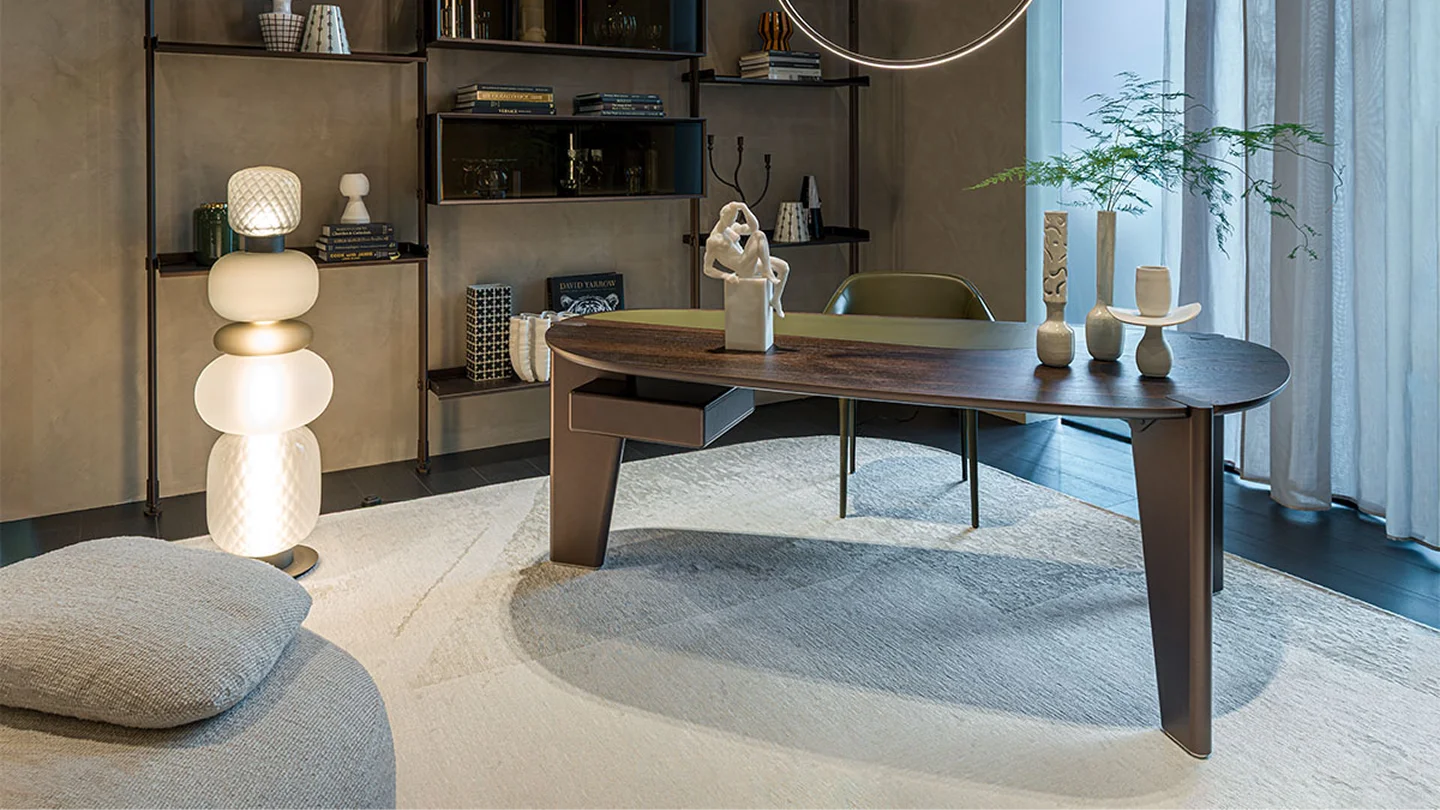
A desk should accommodate the equipment actually used, including monitor depth, keyboard position, notebooks and charging. A shallow decorative desk may suit occasional correspondence but become uncomfortable for full-day work. Place the screen to control glare and leave access to power without trailing cables across a path.
The basic list includes a desk, an adjustable chair, task lighting and storage for active materials. Add guest seating only when meetings genuinely happen in the room. Closed cabinets can reduce visual distraction, while open shelves work for frequently used books and objects.
Check the chair at the desk rather than evaluating each separately. Armrests need to clear the underside, feet should rest comfortably, and the screen should sit at an appropriate viewing height. Comfort is a relationship among pieces.
Guest Room and Flexible Spaces
A guest room may also function as a study, hobby area or secondary lounge. Decide which use is frequent and which is occasional. A sofa bed can free floor area, but confirm how easily it opens and where nearby furniture moves when it does.
Include clear hanging or drawer space so guests do not have to live from a suitcase. A bedside surface, accessible power point and good reading light often contribute more than additional decoration. If the room changes function, select light tables or nesting pieces that can move without difficulty.
Connect the Rooms Without Repeating Them
A strong furniture list for home does not require one colour or collection everywhere. Continuity can come from a repeated timber family, consistent metal temperature, similar line weight or a controlled palette. Each room can then respond to its own light and purpose.
View adjoining rooms together. A tall chair back may interrupt a sightline from the entrance, while a polished tabletop may reflect light into the next space. Samples should be compared in the actual rooms because flooring and daylight alter finishes.
The idea of essential furniture for home is personal. A reading chair may be indispensable for one household and unnecessary for another. A large dining table may matter more than formal living seating. The priority list should reveal this, rather than reproduce a generic model home.
Review Before You Order
For every item, confirm the overall dimensions, delivery route, material, finish, maintenance, lead time and intended position. Tape large footprints on the floor and view them from more than one doorway. Keep photographs and finish samples together so choices made weeks apart still relate.
This final indoor furniture review should also check balance. Are too many pieces raised on thin legs? Are all the surfaces hard and reflective? Is storage concentrated in one room while another remains cluttered? Small adjustments at this stage can prevent expensive replacements later.
Ventura curates furniture for living, dining, bedrooms, kitchens, offices and outdoor settings from European design brands. Browse Ventura’s furniture products to define a shortlist, then compare proportions and finishes at the Bengaluru or Hyderabad showroom. A checklist is most useful when it improves the sequence of decisions, leaving the home room to evolve after the essentials are in place.
0 Comments