
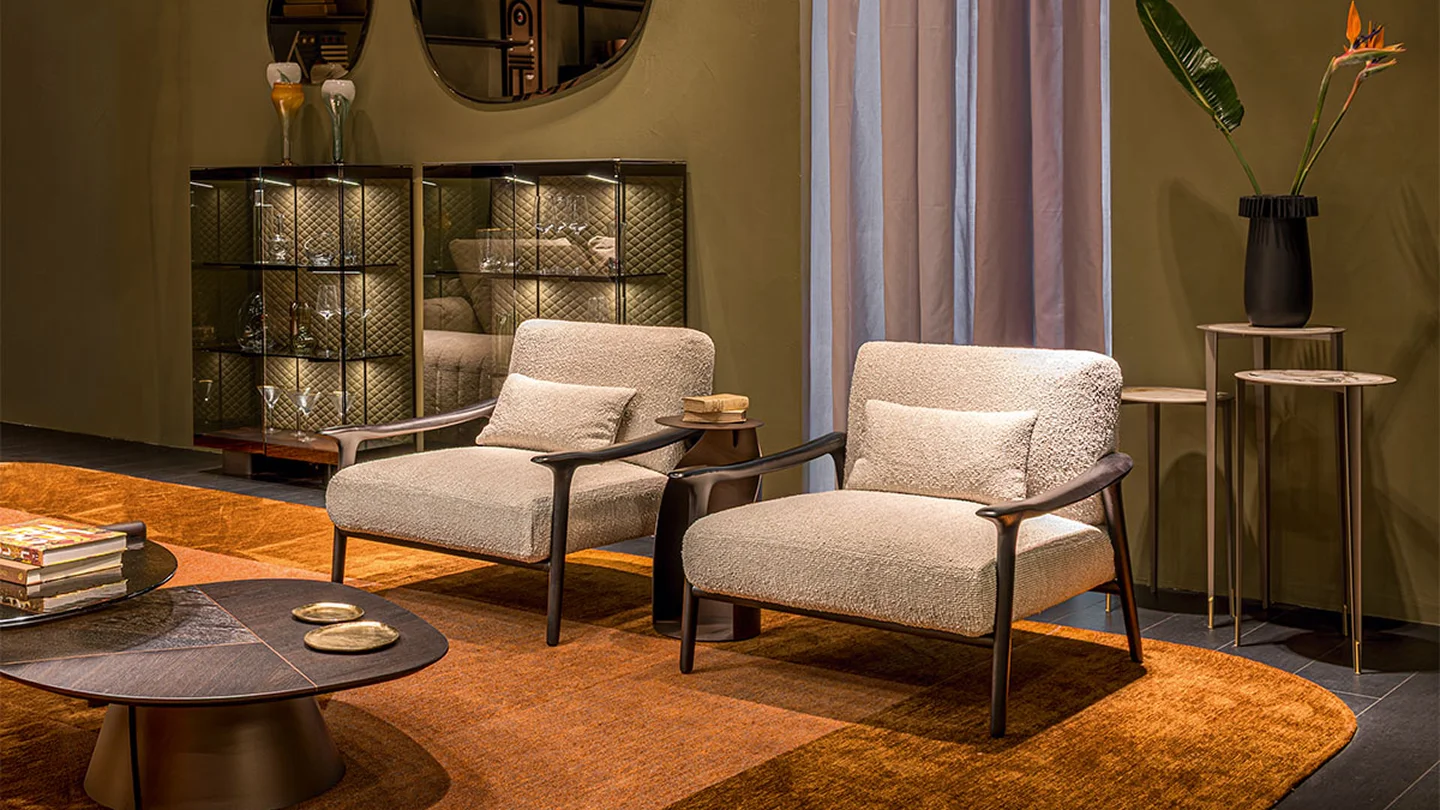
An elegant home is not defined by how much it contains. It is defined by how well its elements relate to one another. The sofa should suit the scale of the room. The dining table should leave space for movement. Lighting, rugs and art should strengthen the composition instead of competing for attention.
This is the foundation of luxury home design: clear decisions, made in the right order. When layout, furniture and finishes are planned as one system, a home feels composed rather than decorated. It also becomes easier to live in, because beauty has been considered alongside comfort, circulation and daily routines.
Begin with the way the home will be used
Before choosing finishes or statement pieces, map the life of each room. Who uses it? At what time of day? Is the living room intended for formal entertaining, relaxed family evenings or both? Does the dining area need to accommodate a regular group of six and a larger group on occasion?
These questions shape the plan more meaningfully than a mood board alone. A deep sectional may be right for long evenings but too dominant in a narrow room. A sculptural dining table can anchor an open plan, provided its base does not restrict comfortable seating. Good luxury home interior design turns these practical constraints into part of the visual idea.
Establish proportion before selecting individual pieces
Furniture reads differently in a showroom and at home. Ceiling height, natural light, door openings and viewing distances all affect its presence. Begin with a measured floor plan and mark the main circulation routes before confirming sizes.
A useful room plan should check:
- The dimensions of every wall, opening and fixed architectural feature
- The clear path between entrances, seating and adjoining spaces
- The relationship between sofa length, rug size and coffee-table position
- The space required to pull out dining chairs comfortably
- The viewing distance and sightline for a television, artwork or focal wall
- The clearance needed for doors, drawers and storage units to open
This exercise prevents a common mistake: buying each object in isolation. The better approach is to judge the negative space around the furniture as carefully as the furniture itself.
Choose one visual anchor for each room
A room benefits from hierarchy. One element can lead, while the others support it. In a living room, that anchor might be a generous sofa, an expressive coffee table or a carefully detailed wall system. In a dining room, it is often the table or pendant light.
The anchor does not need to be the brightest or most ornate object. Its scale, silhouette or material can give it presence. Ventura’s Brera sofa system, for example, can be configured in linear or curved arrangements, allowing the seating plan to respond to the architecture rather than forcing the room into a standard composition.
Build a restrained material palette
Too many unrelated finishes make even expensive rooms feel unsettled. Select a small family of materials and repeat them with variation. Warm timber may appear in cabinetry and return in the legs of an occasional table. A stone surface can be echoed through a smaller accessory rather than repeated at the same scale.
Contrast still matters. Smooth lacquer becomes more interesting beside textured upholstery; dark metal gives definition to pale timber; a soft rug balances the visual weight of marble. The aim is not uniform matching but continuity. This measured use of colour, texture and finish is what helps create timeless interiors.
Let comfort guide the upholstery
Upholstered pieces carry much of a room’s physical and visual comfort. Look beyond colour and assess seat depth, back support, cushion composition, arm height and configuration. The right choice depends on whether the sofa is used for conversation, reading, lounging or a combination of activities.
Modularity can be especially useful in large or open-plan homes. The Air Soft sofa includes freely positioned backrests and configurable elements, making it possible to shape the seating around the room and the moment. This kind of flexibility gives luxury furniture a practical role rather than treating it as a display object.
Mix refined pieces without turning the room into a catalogue
A fully coordinated collection can feel calm, but a room becomes personal through controlled contrast. Pair a clean-lined sofa with a more expressive table, or place a sculptural chair beside restrained cabinetry. Change one or two variables, such as form, period or texture, while keeping the palette connected.
This is also a useful way to introduce italian furniture into an Indian home. Instead of filling every room with recognisable signatures, select pieces for what they contribute to the plan: an adaptable system, an exact proportion, an inventive material detail or a distinctive silhouette. Ventura’s current brand portfolio makes it possible to compare these strengths across collections.
Give storage an architectural role
Storage should reduce visual noise and strengthen the room’s lines. Closed units can conceal practical items, while open shelves create space for books, art and personal objects. In a dining area, a sideboard can connect serving, storage and display without adding another tall volume.
Consider height and depth as carefully as finish. A low unit preserves a long sightline; a taller composition can give an empty wall structure. Explore Ventura’s sideboard collection to see how lacquer, timber, glass, metal and sculptural forms can make storage part of the design language.
Use lighting in layers
One ceiling fixture cannot meet every need. A successful scheme combines ambient, task and accent lighting. Ambient light creates an even base. Task lighting supports reading, working or dining. Accent light draws attention to art, texture or an architectural surface.
Plan switching and dimming early, especially in open spaces where the atmosphere may need to change through the day. Decorative lights should be selected in relation to the furniture beneath them. A pendant over a dining table, for instance, needs the right drop, width and light quality, not merely a dramatic profile.
Style with fewer, better-placed objects
Styling is the final layer, not a substitute for a resolved room. Start with the objects that carry meaning: art, books, collected pieces and photographs. Then add only what the composition needs.
Vary height and shape, but leave surfaces with breathing room. On a long console, one substantial object and a small grouping often feel more assured than a line of evenly spaced accessories. Rugs and curtains should also be treated as part of the architecture. Their scale, texture and fall influence how the whole room is perceived.
The same discipline applies when selecting contemporary furniture. A piece should earn its place through use, proportion or character. If it does none of these, it is likely adding noise.
Resolve the home as a sequence, not a set of separate rooms
Each room can have its own mood while still belonging to the same home. Repeat a material, colour temperature or geometric idea across spaces. The connection can be subtle: the bronze finish of a living-room table may reappear in a bedroom lamp, or a curved sofa may be answered by the shape of a dining chair.
The transition between rooms matters as much as the rooms themselves. Check what is visible through doorways and across open-plan zones. A strong luxury home design scheme creates continuity from one view to the next without making every area identical.
Make the final selection with the room in mind
Digital research can narrow the possibilities, but material, comfort and scale are more accurately judged in person. Bring plans, dimensions, finish references and photographs when reviewing Ventura’s furniture collections. It allows each option to be evaluated against the actual home rather than an imagined setting.
For a more integrated project, Ventura’s private-client process covers customised planning, built-in solutions, furniture selection, order coordination and delivery. The value lies in connecting the decisions, so the layout, materials and designer furniture work together from the beginning.
Elegant living is ultimately the result of editing. Choose the anchor, protect circulation, repeat materials with care and let personal objects complete the story. When every element has a purpose, the home feels confident without needing to announce its luxury.
Ready to compare dimensions, configurations and finishes for your space? Book a Ventura showroom consultation in Bengaluru or Hyderabad and review the options against your plans.
0 Comments