
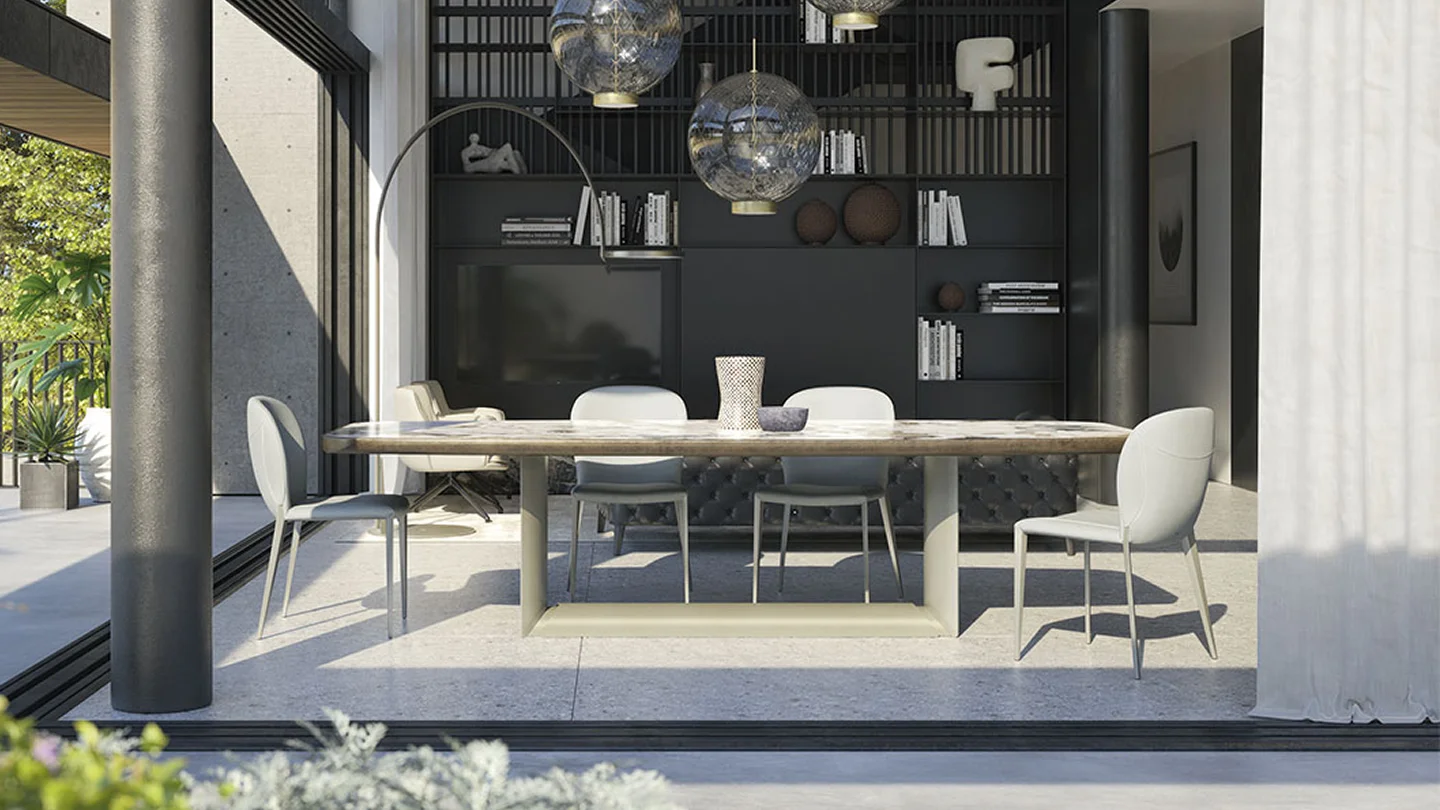
A dining room comes to life when people gather around the table. It may host quick weekday meals, slow Sunday lunches, festive celebrations and conversations that continue long after the plates have been cleared.
The right Italian dining furniture supports all these moments while bringing a sense of order to the room. The table establishes the centre, the chairs provide comfort, and the surrounding lighting and storage complete the setting. At Ventura Interiors, we consider these elements together so the room feels composed without becoming overly formal.
Begin with the Way You Entertain
Before selecting a table, consider how many people use it regularly and how often you host larger gatherings. A table designed only for occasional celebrations may occupy more space than the family needs every day.
The shape of the room also guides the arrangement. Rectangular tables sit naturally in longer rooms, while round tables encourage conversation and work well in square spaces. An oval design retains useful length but introduces softer edges, making movement easier around it.
Mark the proposed table and chair positions on the floor. Pull one chair back as if someone were leaving the table and check whether there is still a comfortable route behind it. This gives a more realistic picture than measuring the tabletop alone.
In an open-plan home, the dining arrangement should also relate to the kitchen and living room. The table can define the dining space without becoming a visual barrier between these connected areas.
Choose an Italian Dining Table as the Anchor
An Italian dining table can be understated or sculptural, depending on the atmosphere you want to create. Some designs allow the material to lead through marble, ceramic, timber or glass. Others make the base the focal point through an architectural or gently curved form.
Size remains the first consideration. Each person should have enough width to sit and dine comfortably, while the table should leave space for serving dishes when required. The supports must also be positioned so they do not reduce legroom or interfere with the chairs.
A central base can provide greater flexibility around a round or oval table. Corner legs may suit a more linear design, but their position determines how many chairs can fit comfortably. Extendable tables can be useful when the household entertains occasionally but does not need a large surface every day.
Ventura’s current dining-table collection includes pieces such as the Air Table, Atlantis Keramik and Atrium Ker-Wood Round. The range demonstrates how different shapes, materials and bases can give the room a completely different character.
Pair the Table with Italian Dining Chairs
Comfort becomes especially important when a meal turns into a long conversation. Italian dining chairs are often shaped to support the body while maintaining clean, visually balanced proportions.
The chair seat should leave comfortable room beneath the tabletop. If the chair has arms, check that they can slide under the table without touching the frame below it. The total chair width also matters because broad seats can reduce the number that fit around the table.
Upholstered chairs bring softness to stone, ceramic and glass tables. Timber or leather details can add warmth, while chairs with slender legs help a heavier table appear more balanced. A curved back works naturally with round and oval tables, although it can also soften a rectangular setting.
The chairs do not need to match the table exactly. Connecting them through one repeated colour, finish or shape is usually enough. Ventura’s dining-chair collection includes designs such as Arcadia, BOMBÈ and Camilla, offering different levels of structure, softness and visual presence.
Balance Shape with Material
Materials influence how substantial the complete dining arrangement appears. A marble or ceramic table carries a strong visual presence, so quieter upholstered chairs can keep the room balanced. A transparent glass top feels lighter and allows a sculptural base to remain visible.
Timber brings natural warmth and works particularly well when the dining room connects with a living area containing wooden furniture. The finishes do not have to be identical, but they should share a similar warm or cool undertone.
Metal details can add definition through chair legs, table supports or lighting. Repeating the same metal tone in two or three places creates continuity without making every element look like part of one set.
Good designer dining furniture often brings several materials together in a controlled way. The design feels elevated because the glass, stone, leather, fabric, timber and metal have been considered as a group rather than selected separately.
Decide Whether the Table or Chairs Should Lead
Every dining room benefits from a clear focal point. If the table has a dramatic base or heavily veined surface, simpler chairs allow it to remain the centre of attention. When the table is restrained, the chairs can introduce a stronger colour, curve or texture.
Using bold tables and bold chairs together can work in a very large room, but the pairing requires enough empty space around it. In a compact setting, two highly expressive elements may compete and make the arrangement feel crowded.
One practical approach is to choose the table first and then compare chair options around it. Viewing the actual pieces together reveals differences in height and proportion that can be difficult to judge from separate images.
The aim is not to make one element disappear. It is to give the table and chairs distinct roles within the same composition.
Compare Dining Brands by Design Character
There is no single dining-table brand that is best for every home. The stronger choice is the one whose materials, proportions and design approach suit your room and lifestyle.
Cattelan Italia is a leading option for sculptural tables and contemporary dining settings. Its collections are known for using materials such as ceramic, glass, timber, leather and metal to create pieces with a strong architectural presence.
Poliform takes a quieter and more coordinated approach. Its tables and chairs can connect naturally with storage and living-room furniture, making the brand suitable for open-plan homes that need a consistent design language.
Arketipo brings a more expressive personality through distinctive shapes and material combinations. Its collection works well for interiors that want a stronger sense of individuality.
These are all brands represented by Ventura Interiors. Comparing them in the showroom makes it easier to understand how their finishes, construction and proportions differ before deciding which one belongs in your home.
Complete the Room with Practical Storage
A sideboard gives serving dishes, table linen and glassware a dedicated place. It also creates a useful surface for artwork, lighting or a few decorative objects.
The sideboard does not need to come from the same collection as the table. Its height, depth and finish should simply relate to the room and leave enough space for people to move around it.
A visually heavy table may work better with a sideboard raised on slender legs. A lighter table can sit comfortably beside a more substantial storage piece. Explore Ventura’s sideboard collection to compare different proportions and finishes.
A serving trolley or console may also be useful when the room regularly hosts larger groups. However, every addition should have a clear purpose. Too many furniture pieces can make even a generous room feel smaller.
Use Lighting to Centre the Table
A pendant light can visually anchor the dining arrangement and create a warmer atmosphere in the evening. Its position should follow the table rather than the centre of the room, particularly when the two points are different.
The shape of the light can relate to the table. A long fitting suits a rectangular or oval surface, while a circular pendant can echo a round table. A group of smaller lights may work over a longer design when their spacing feels even.
The fixture should illuminate the tabletop without creating uncomfortable glare. It also needs to sit high enough that people can see one another clearly across the table.
Additional wall or floor lighting can soften the rest of the room. This prevents the dining area from feeling like a brightly lit island surrounded by darkness.
Add Personality Without Crowding the Table
A dining room does not need several decorative objects to feel complete. The materials and shapes of the furniture may already provide much of the visual interest.
A bowl, vase or low arrangement can add character without interrupting conversation. Artwork can bring colour to a nearby wall, while a rug may help define the setting in an open-plan home.
If the table has a detailed stone or ceramic surface, leaving more of it visible can be more effective than covering it. Simple styling allows the material to remain part of the room’s personality.
Curtains, upholstery and artwork can introduce colour without requiring permanent changes to the main furniture. This gives the room flexibility as personal tastes evolve.
Bring the Complete Dining Setting Together
Successful Italian dining furniture is not defined by one recognisable table or chair. It comes from the relationship between scale, comfort, materials and the way people move through the room.
Choose the table according to everyday use, pair it with chairs that remain comfortable through long meals and allow lighting and storage to support the setting. The individual elements can have their own character while still feeling part of one room.
Visit Ventura Interiors in Bengaluru or Hyderabad to explore dining tables, chairs and complementary collections from established European brands. Our design team can help you bring the right pieces together for a dining room that feels sophisticated, welcoming and made for gathering.
0 Comments