
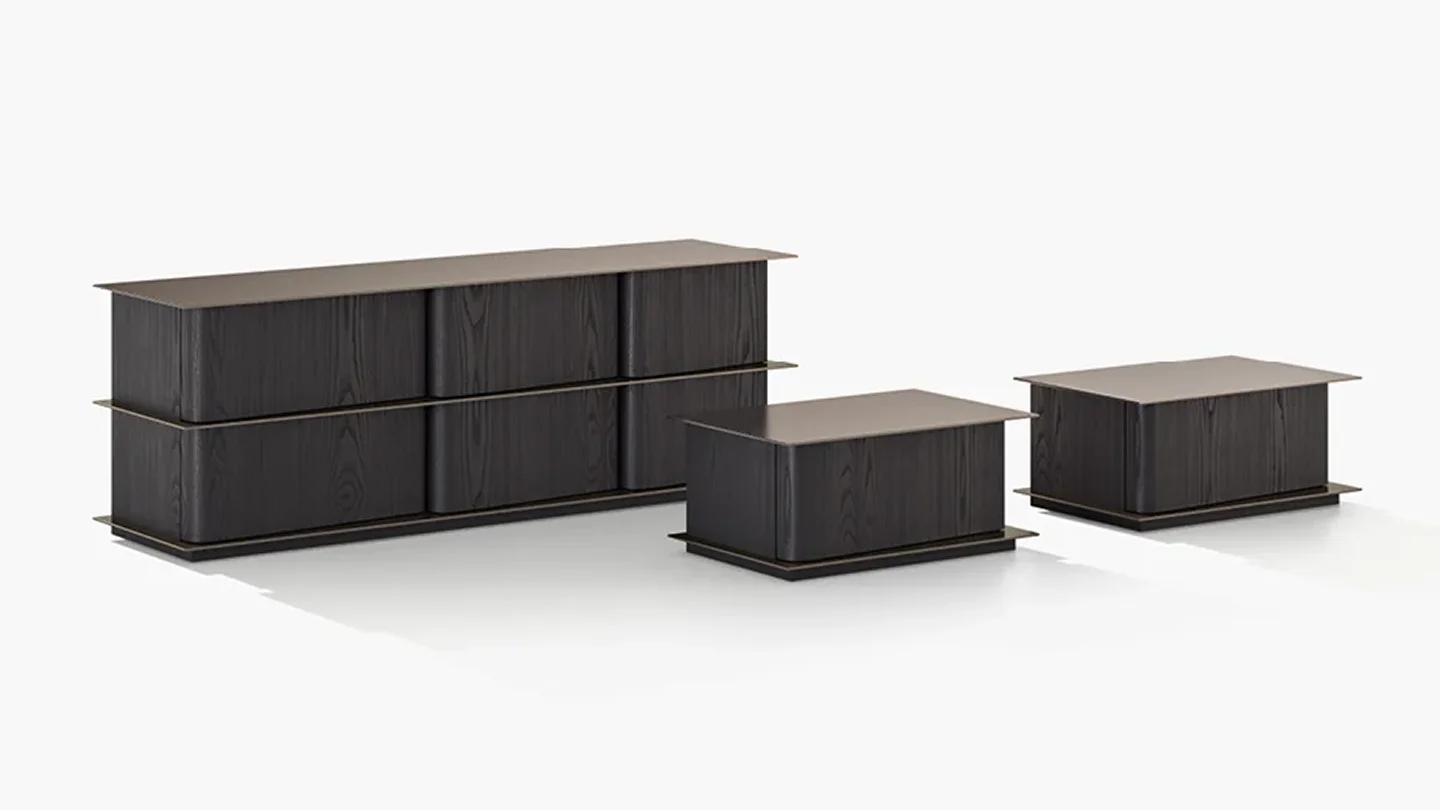
A dining table acquires small marks where plates are passed. A drawer is opened thousands of times. A bed carries weight in the same places every night. Wood suits these ordinary jobs, and its grain stops the large surfaces from feeling anonymous.
This is where the benefits of wood furniture become specific. A species name is not enough. Veneer thickness, internal construction, joints, finish and care alter what the owner experiences. The useful question is whether this particular piece is right for its job.
Wood gives a room variation without visual noise
Grain interrupts a large surface in a quiet way. Even a simple table top has shifts in line and tone that change as daylight moves across it. This can make a room feel less flat without relying on pattern everywhere else.
That variation makes the sample worth a second look. Turn it towards the window, then away from it. Grain direction, cut and finish can make one named colour appear quite different across two surfaces. The supplier should explain which differences are expected in the delivered item.
Modern wood furniture can be quiet rather than traditional. A thin edge beside stone, a straight timber plane above metal legs or a pale veneer near upholstery changes the reading completely. Texture comes from the wood. The outline sets the mood.
Look beyond the label to the construction
“Wood” can describe solid timber, veneer over a stable core, engineered panels or a combination of methods. None of those descriptions is a complete quality judgement. Each can serve a different purpose within the same item.
Ask what the visible surface is made from, what sits beneath it and how edges have been finished. On a long top, find out how the structure accounts for movement in the material. For a cabinet, inspect the back, drawer boxes, runners and hinges rather than judging only the doors.
Ventura’s guide to types of wood used in furniture explains hardwood, softwood and engineered options. Use that background to frame product-specific questions. The type of wood furniture chosen should follow the load, scale, finish and maintenance expected from the piece.
Record the specification rather than relying on the showroom description later. A photograph of the sample, the written finish name and notes on the internal construction make comparisons more reliable. They also help if several rooms are being furnished over time and the same surface relationship needs to be revisited.
Repair and renewal may extend useful life
A serving bowl leaves a line on the table. The useful response depends on what that surface actually is. Some constructions and finishes allow a professional touch-up or refinishing; another may require the affected component to be replaced. Buyers should establish the option before the first mark appears.
A thin veneer and a thick solid section cannot receive the same treatment. Nor should an unidentified coating meet sandpaper or polish chosen by trial. Ask the showroom to describe a realistic repair route, the service contact and the manufacturer’s care instructions.
Price does not stop daily contact from leaving evidence on premium furniture. The real advantage is knowing what to do next. That answer belongs in the buying decision, not in a hurried search after damage occurs.
Weight and stability come with practical trade-offs
A large table that stays firm during dinner may need four people to move it later. Beds and storage units raise the same trade-off. Weight can feel reassuring in use, but it changes delivery, placement and any future rearrangement.
Walk the delivery route before ordering. Record the lift, staircase turns and narrowest doorway, then check the final position. Ask which components separate and who handles installation. A piece can fit the room and still stop at the corridor.
Stability depends on design and assembly as much as material. Sit at the table, open the extended leaf, pull out a loaded drawer and check the bed frame at its joints. These actions reveal more than pressing a hand against the top.
A dining table shows wood at its busiest
A wooden dining table combines a broad visible surface with repeated contact, movement and cleaning. Its advantages are easiest to appreciate when the dimensions, finish and construction match the household.
Start with normal meals rather than the largest possible gathering. Pull every chair back and walk behind it while someone remains seated. Then examine the top. Ask the salesperson to demonstrate the approved response to a spill and identify any cleaner, hot vessel or serving habit the finish cannot tolerate.
The Henry dining table by Poliform provides a grounded Ventura example. Its structure is made in solid wood, while the rectangular top is available in wood, marble or glass finishes. It is also offered in an extendable form. The choice between those options should follow daily use, room scale and the kind of care the household accepts.
Storage depends on the parts people touch
Wooden storage furniture earns its place through repeated small actions. Drawers should open without forcing the neighbouring door. Shelves need to support the intended contents. Handles, runners and hinges matter because those are the parts used every day.
Bring a list of what the unit must hold. Dinnerware requires different depths from folded clothing; files, cables and devices introduce other needs. Check internal dimensions rather than relying on the exterior width. In a tight bedroom, test the space required for a drawer to open fully.
Ventura’s Abbinabili storage collection by Poliform includes bedside and chest-of-drawer formats, including a four-drawer version with a drop-leaf surface that can be used as a writing desk. That specific feature shows how storage can take on a second task without adding another freestanding piece.
A bed must be evaluated as a system
A wooden bed has a life below the visible headboard. Look at the mattress support, centre reinforcement, joints and feet. Run a hand around the points where materials meet. The specification should identify the timber, upholstery and metal components, as well as the on-site assembly.
Add the mattress before judging height. Sit on the edge and reach towards the proposed bedside table. Then open the nearby wardrobe and each drawer. These actions expose an awkward surround or misplaced table faster than a frame measurement alone.
The visual weight of the bed matters too. A deep timber surround can feel settled in a generous room but consume useful floor in a compact one. Lighter profiles or mixed-material construction may preserve the warmth of wood while reducing bulk.
Mix wood tones by relationship, not by exact match
Homes rarely contain one wood finish forever. Flooring, doors and existing furniture already establish several tones. Trying to reproduce each one exactly can make every later purchase unnecessarily difficult.
Place the samples beside each other. A reddish timber and a pale neutral one can read as a deliberate contrast. Two browns that nearly agree may seem like a failed match. A shared dark edge, rounded profile or matte surface can connect them without pretending they are identical.
Italian wood furniture also shows why origin is not a single visual style. One design may expose cabinet-making details; another may use wood as a thin architectural plane beside glass or stone. Compare the role of the material in the design instead of treating the country label as proof of suitability.
Care begins with the product instructions
Care starts with small habits. Dust should not sit in corners, a spill should not wait until morning, and hot or rough objects need the protection recommended for that surface. Beyond that, the finish controls the method. The wrong polish can be more troublesome than no polish.
Request the care sheet before paying. It should settle whether the surface is waxed, polished or simply cleaned, and explain when professional service is required. Store it with the invoice. Years later, the finish name is easier to retrieve from a document than from memory.
Keep a short ownership record containing:
- The wood, veneer or engineered material used
- The manufacturer’s finish name
- The approved cleaning method
- The assembly and installation details
- The available repair or service contact
Seen together, the benefits of wood furniture become clearer when the material, construction and room are considered together. Bring floor plans, photographs, measurements and details of daily use to Ventura’s Bengaluru or Hyderabad showroom. Book a furniture consultation to compare finishes, construction and proportions against the pieces your home actually needs.
0 Comments