Have you ever walked into a bedroom and immediately felt relaxed, but you couldn’t quite put your finger on why? It wasn’t just the soft sheets or the calming paint color. It was the layout. The way furniture is arranged dictates how a room feels and functions. A chaotic layout creates a chaotic mind, which is the last thing you want when you are trying to sleep.
Designing a restful sanctuary requires more than just buying nice pieces. It requires a plan. You need to understand flow, balance, and the subtle psychology of space. Whether you have a sprawling master suite or a cozy city apartment, the rules of bedroom furniture layout remain remarkably consistent. Let’s walk through the non-negotiables that interior designers use to create those magazine-worthy spaces.
Start with the Bed: The Command Position
The bed is the star of the show. It is the largest item in the room and dictates where everything else goes. Designers almost always place the bed in the “command position.” This means positioning the bed so you can see the door when you are lying down, but you are not directly in line with it. This taps into a primal instinct for safety and control.
In most Indian homes, the solid wall opposite the entry door is the prime spot. Anchoring your headboard against a solid wall provides a sense of grounding. Avoid placing the bed under a window if you can help it. Drafts and outside noise can disrupt your sleep, and it often looks visually cluttered.
The Exception to the Rule
Sometimes, architectural quirks force your hand. If you must place the bed in front of a window, choose a lower headboard that doesn’t block the light. Use heavy drapes to create a “wall” of fabric behind you at night. This restores that feeling of security without sacrificing natural light during the day.
Leaving Breathing Room
Never push the side of your bed against a wall unless it is absolutely necessary for a child’s room or a very small guest room. Adults need access from both sides. It makes making the bed easier and prevents the person sleeping on the wall side from feeling trapped. Aim for at least 24 to 30 inches of walking space on either side. Check out our collection of beds to find the right frame size for your specific wall dimensions.
Prioritize Traffic Flow and Clearance
A beautiful room is useless if you are constantly tripping over things. Bedroom furniture placement is largely about preserving traffic flow. You need clear pathways to travel from the door to the bed, and from the bed to the bathroom or wardrobe. These paths should be unobstructed by ottomans, bench corners, or stray chairs.
Designers map out these “desire lines”—the natural paths you take through a room. If you have to shuffle sideways to get past the foot of the bed to reach the dresser, the layout is wrong. You generally need about 30 inches of clearance between major furniture pieces to walk comfortably.
The Dresser Dilemma
If your bedroom is narrow, a deep dresser opposite the foot of the bed can become a bottleneck. If you pull out a drawer, does it hit the bed? If yes, you need a different solution. Consider a taller, narrower chest of drawers or move the dresser to a side wall.
Small Room Solutions
For compact urban bedrooms, standard clearance rules might feel impossible. In these cases, look for rounded furniture edges. A curved bench or a round side table is much more forgiving on your shins than sharp corners when space is tight. You can find more tips on maximizing tight spaces in our guide on Smart Space-Saving Furniture for Small Apartments.
Balance with Nightstands and Lighting
Symmetry brings calm. In a bedroom, your brain loves seeing balance around the bed. This is why designers typically insist on matching, or visually similar, nightstands on either side. It frames the bed and gives the room a polished, intentional look.
However, “matching” does not mean “identical.” You can have a round table on one side and a square cabinet on the other, as long as they are roughly the same height and visual weight. The key is that neither side feels heavier or more cluttered than the other.
Lamp Logic
Lighting height is crucial. Your bedside lamps should be tall enough that the bottom of the shade is at eye level when you are sitting up in bed. If the lamp is too small, the scale of the room looks off.
Floating Options
If you are short on floor space, skip the traditional nightstand entirely. Wall-mounted shelves or floating drawers keep the floor clear and make the room look bigger. Pair these with wall sconces instead of table lamps to free up surface area for your phone and water glass. Browse our bedside tables to see options that fit both spacious and compact layouts.
Mastering Wardrobe Placement
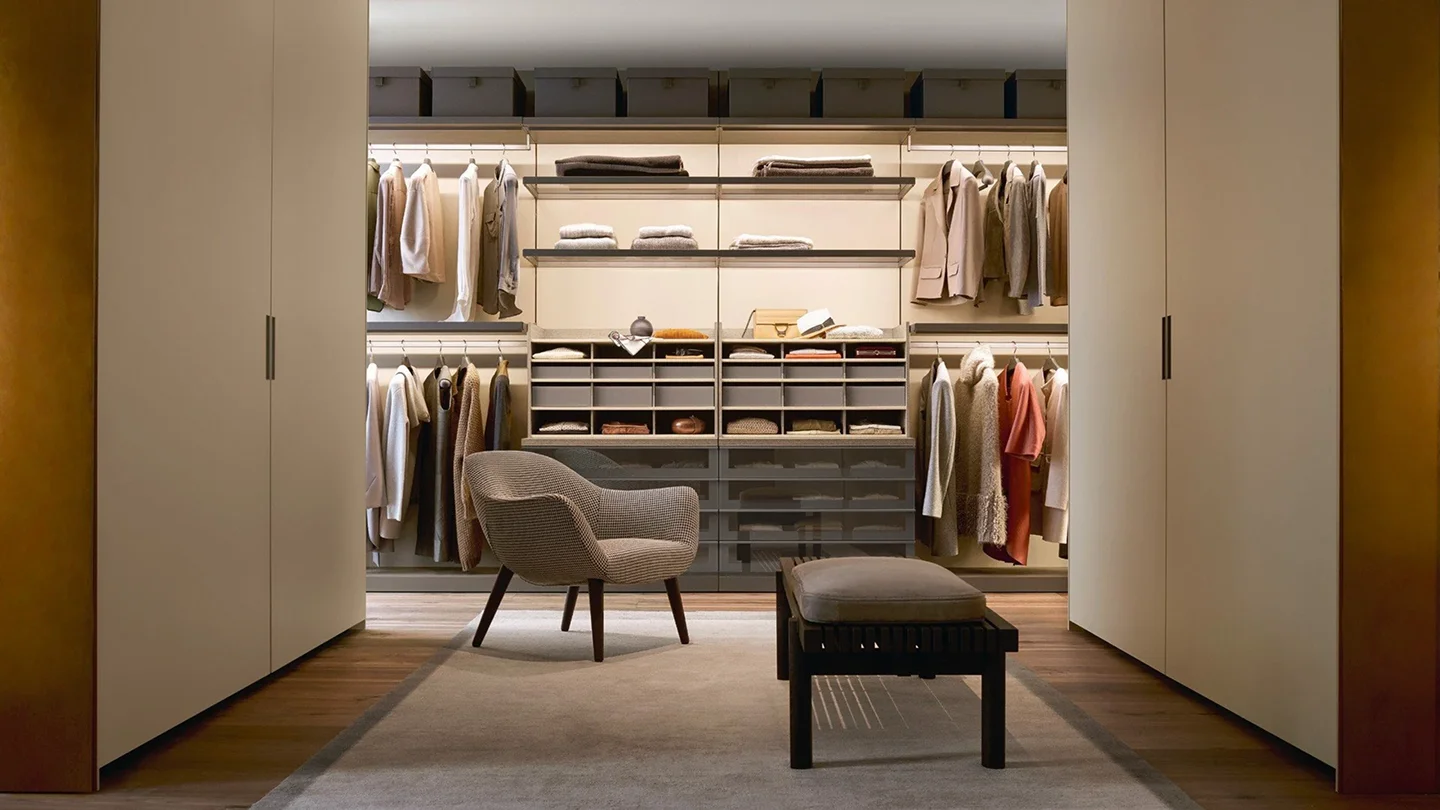
In many Indian homes, the wardrobe is a heavy, built-in element. If you have freestanding bedroom furniture arrangement options, placement is key. You never want a wardrobe looming over the bed. It can make you feel claustrophobic. Ideally, wardrobes should be placed on the side walls or in an alcove where they blend into the architecture.
The doors are the biggest factor here. Swing doors need clearance space to open fully. If your layout is tight, sliding door wardrobes are a lifesaver. They give you full access to your storage without eating into your walkway.
Visual Weight
Wardrobes are visually heavy. To balance this, try to place them on the wall that is least visible when you first enter the room. If that is not possible, mirrors on the wardrobe doors can help “dissolve” the heavy look by reflecting the rest of the room.
Dressing Zones
Try to keep your dressing area consolidated. Your wardrobe, hamper, and a full-length mirror should be in the same zone. This prevents you from running back and forth across the room in the morning. It streamlines your routine and keeps the mess contained in one area. Take a look at our wardrobes for sleek designs that minimize visual clutter.
Anchoring with Rugs
A rug is the glue that holds your bedroom layout ideas together. A common mistake is choosing a rug that is too small. A postage-stamp rug at the foot of the bed looks lonely and disjointed. Designers follow a strict rule: the rug should go under the bed.
Ideally, the rug should start a foot or two in front of your nightstands and extend past the foot of the bed. This ensures that when you step out of bed in the morning, your feet land on something soft, not cold tiles.
Texture and Sound
Beyond layout, rugs add essential texture. Bedrooms are hard-surface heavy with wood and glass. A plush rug softens the acoustics, making the room quieter and more intimate.
Layering
If you have wall-to-wall carpeting that you don’t love, you can layer a patterned area rug on top to define the sleep zone. It adds a pop of personality and anchors the bed visually.
Creating a dedicated “Pause” Point
Every great bedroom layout includes a spot to sit that isn’t the bed. It could be a bench at the foot of the bed, a reading chair in the corner, or a window seat. This is your “pause” point. It is where you sit to put on shoes or read a book.
This zone prevents the bed from becoming the only place to exist in the room. It separates “sleep” from “rest.” Even in a small room, a tiny accent chair tucked into a corner can serve this purpose effectively.
Corner Utilization
Corners are often wasted space. A comfortable chair with a small side table and a floor lamp turns a dead corner into a functional reading nook. This adds value to your bedroom furniture layout plan by creating a secondary functional zone.
The Bench Rule
If you place a bench at the foot of the bed, ensure it is slightly narrower than the bed itself. If it is wider, it trips you up visually and physically. It should act as an extension of the bed, not a barrier.
Strategic Mirror Placement
Mirrors are a designer’s secret weapon for layout correction. They bounce light around and can make a cramped bedroom feel double the size. However, placement matters significantly for comfort.
Avoid placing a large mirror directly facing the bed. Movement in the mirror can be distracting when you are trying to sleep. Instead, place mirrors on adjacent walls or inside closet doors.
Reflecting Views
Position mirrors to reflect something beautiful, like a window with a view or a piece of art. Don’t position them to reflect a cluttered hamper or a blank wall. For more on this, read our detailed article on Mirrors in Decor: Visual and Practical Benefits Explained.
Light Enhancement
A mirror placed opposite a window amplifies natural light. This is crucial for bedrooms that might be north-facing or generally dark. It makes the bedroom furniture placement feel airier and more open.
Lighting Layers and Ambiance
You cannot plan a layout without planning lighting. Furniture and lighting must work together. If your dresser is in a dark corner, it is useless. Designers layer lighting: ambient (overhead), task (bedside/reading), and accent (mood).
Your how to arrange bedroom furniture strategy must include power outlets. Are there plugs near where you want the nightstands? If not, you will have messy extension cords ruining your clean lines. Check this before you move the heavy stuff.
Mood Setting
Bedroom lighting should be dimmable. Bright, hospital-like lighting kills relaxation. Use warm bulbs and lamps with shades that diffuse light softly.
Enhancing Furniture
Use light to highlight your furniture. A floor lamp next to an armchair invites you to sit. A picture light above the bed draws the eye to the focal point. To understand this better, check out How Lighting Can Elevate Your Furniture and Room Ambiance.
Recap
Designing the perfect bedroom layout isn’t magic; it is a series of logical decisions. By prioritizing the bed’s position, ensuring clear walkways, and balancing the visual weight of your furniture, you can create a space that feels professionally designed. Remember, the goal is a room that supports rest. It should be easy to move through, easy to tidy, and easy to relax in. Start with the big pieces, follow the clearance rules, and let the comfort follow naturally.
Ready to make your dream home come true? Let’s curate the perfect bedroom sanctuary for you today.

0 Comments